
Mastering the Butterfly Stroke: A Parent's Guide to Dolphin Kicks, Timing and Confidence
Post Summary: Butterfly looks hard, but with the right building blocks—dolphin kicks, undulation and rhythm—any child can learn it. This guide breaks down the stroke step by step using fun, easy cues.
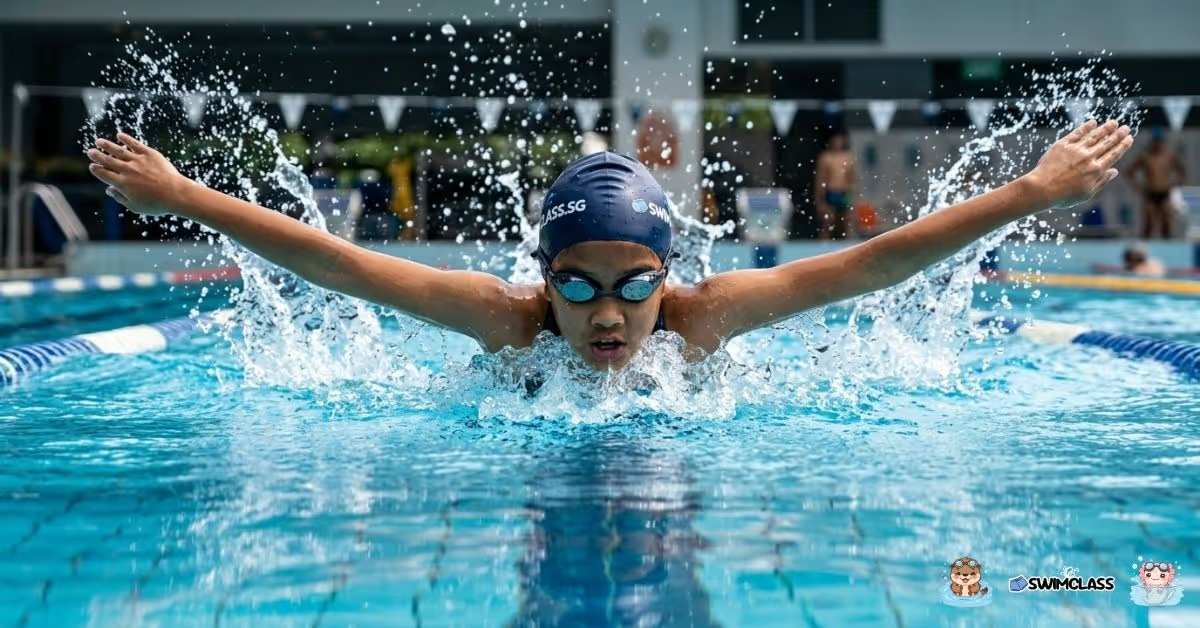
Swimming the butterfly stroke is often seen as the most powerful and impressive stroke in the pool. With its simultaneous arm recovery and undulating dolphin kick, it looks like a dance across the water. For many young swimmers, butterfly is the stroke that makes them feel strong and fast.
But butterfly can also feel intimidating. The timing is tricky, and it demands coordination and core strength. That's why swimming lessons that focus on building the stroke step by step are essential—especially for helping children gain confidence before adding the full arm movement.
Whether you are a parent looking for swimming lessons Singapore that teach proper technique safely, or a competitive swimmer wanting to smooth out your butterfly, understanding the fundamentals will make all the difference.
Here are the key benefits of mastering the butterfly:
- Builds Full‑Body Strength: Engages the shoulders, chest, core and legs—one of the best strokes for overall muscle development.
- Develops Rhythm and Coordination: The "two kicks per arm pull" pattern teaches excellent body awareness.
- Improves Core Stability: The undulating motion strengthens the abdominal and lower back muscles like no other stroke.
- Boosts Confidence: Mastering a challenging stroke gives children a huge sense of achievement.
The Foundation: The Dolphin Kick and Body Undulation
Before any arms, children must learn the dolphin kick. It is the engine of butterfly, and without a good kick, the arms become exhausting.
The dolphin kick is a wave‑like movement that starts in the chest, travels through the hips, and finishes with a snap of the feet. We use a simple cue:
"Pretend you're a dolphin or a mermaid. Your body makes a smooth wave from your chest to your toes."
To teach this:
- Start on the stomach with arms extended in front. Practice pressing the chest down, which lifts the hips, then letting the legs follow with a gentle kick. This is the "wave."
- Keep the legs together—dolphin kick uses both legs as one fin. No scissor or flutter kicks.
- Kick from the hips, not the knees. A big knee bend creates drag and looks like a "bicycle kick." We tell kids: "Imagine your legs are tied together at the knees; kick with your whole legs."
A fun way to practice is with a kickboard. Have your child hold the board with arms extended and focus on making a smooth wave while breathing to the side.
Adding the Arm Pull: The Keyhole Shape
The butterfly arm pull is a simultaneous motion often described as a "keyhole" shape. Both arms move together in a pattern: out, down, in, and back.
Here's how to break it down:
- Entry (Thumbs Down): Arms enter the water about shoulder‑width apart, thumbs down, with palms facing outward.
- Outsweep: Hands sweep out and down to catch the water.
- Insweep: Hands sweep inward toward the chest, pushing water back.
- Recovery: Arms exit the water at the hips and swing forward low over the water—never high and wide like a butterfly's wings (a common mistake).
We tell kids: "Draw a big keyhole with your hands. Reach out wide, scoop in, and push all the way past your hips."
The Rhythm: Two Kicks Per Pull
The most important part of butterfly is the rhythm. There are two dolphin kicks for every arm pull:
- First kick – as the hands enter the water and begin the outsweep. This kick helps propel the body forward.
- Second kick – as the hands push past the hips and begin the recovery. This kick lifts the hips and helps the arms swing forward.
A simple way to teach the rhythm is with a verbal cue: "Kick‑pull‑kick‑recover." Have your child practice the pattern on land or with fins before swimming it.
Breathing in Butterfly
Breathing in butterfly is quick and low. Unlike breaststroke, the head should not lift high; instead, the chin skims the water surface.
We teach children to breathe during the second kick, just as the hands start to recover forward. The head lifts slightly, the mouth clears the water, then the face goes back down before the arms enter again.
Key cues:
- "Look at the water, not the sky."
- "Breathe when your hands come to your thighs."
If a child lifts their head too high, their hips sink and the stroke becomes very hard. Emphasise keeping the forehead low and the chin just touching the water.
Fun Drills to Practice at Home (or in the Pool)
These drills help build butterfly step by step, using our swimming lessons Singapore approach.
Dolphin Kick on the Side
This drill helps children feel the wave‑like undulation without worrying about breathing.
How to do it: Have your child lie on their side with one arm extended forward and the other resting on the hip. They perform the dolphin kick while looking at the side of the pool. After a few lengths, switch sides.
What it teaches: Body undulation and core control
Kid‑Friendly Cue: "Make your body wiggle like a dolphin swimming on its side."
One‑Arm Butterfly
This drill simplifies the arm coordination so children can focus on timing and rhythm.
How to do it: Have your child swim butterfly using only one arm at a time. The other arm stays extended forward or rests at the side. They should still use two dolphin kicks per arm pull. After a length, switch arms.
What it teaches: Arm timing and kick‑pull rhythm
Kid‑Friendly Cue: "Kick‑pull‑kick‑recover. Now the other arm."
Butterfly with Fins
Fins (short swimming fins) are a fantastic tool for learning butterfly. They add propulsion and help children feel the rhythm without exhausting themselves.
How to do it: Put on fins and practice full butterfly. The fins make the second kick stronger, helping the arms recover more easily. Once the rhythm is natural, remove the fins and try again.
What it teaches: Full stroke rhythm and timing
Kid‑Friendly Cue: "Let the fins help you bounce forward."
Common Mistakes to Avoid (And How to Fix Them)
Here are typical butterfly challenges and simple fixes using child‑friendly language.
- Bending knees too much (bicycle kick)
Fix: "Keep your legs together and kick from your hips. Imagine you are wearing a mermaid tail." - Lifting the head too high to breathe
Fix: "Keep your forehead down. Breathe by looking at the water, not the sky." - Recovering arms wide and high
Fix: "Swing your arms low and forward like you're sliding them over a table." - One kick only
Fix: "Two kicks! Kick when your hands go in, and kick when your hands come out."
Building Confidence Through Quality Instruction
Butterfly is a stroke that truly benefits from patient, step‑by‑step teaching. In our swimming lessons, we always start with the dolphin kick and use fins to help children feel the rhythm before adding the full arm pull. This builds confidence and prevents frustration.
When choosing a swim school for butterfly, consider:
- Do they teach butterfly as a progression (kick first, then arms, then timing)?
- Are instructors comfortable using fins and drills to simplify the stroke?
- Do they offer small classes where your child gets individual feedback?
If you're looking for a place where challenging strokes are taught with patience and fun, swimclass.sg offers small‑group and private lessons tailored to every age and level. Their instructors break down butterfly into manageable steps, so children learn to love the stroke rather than fear it.
Conclusion
Butterfly is a stroke of rhythm and strength, but it doesn't have to be overwhelming. By starting with the dolphin kick, adding one‑arm drills, and using fins to feel the timing, children can learn to swim butterfly smoothly and with confidence.
Remember: dolphin kick, two kicks per pull, low breathing, and low arm recovery. With practice and the right guidance, your child will soon be gliding across the pool with the grace of a dolphin.
Frequently Asked Questions
What's the first thing kids should learn before attempting full butterfly?
The dolphin kick, practiced separately from the arms. Without a solid kick foundation, the arm movement becomes exhausting and technique breaks down quickly.
How many kicks happen per arm pull in butterfly?
Two — one as the hands enter the water and begin the outsweep, and a second as the hands push past the hips into recovery. This "kick-pull-kick-recover" rhythm is the core timing pattern.
Why do fins help when learning butterfly?
Fins add propulsion, which makes the second kick stronger and helps the arm recovery feel easier — letting swimmers focus on rhythm and timing before removing the extra assistance.
Why shouldn't swimmers lift their head high to breathe in butterfly?
Lifting the head too high sinks the hips and makes the whole stroke significantly harder. The chin should stay low, skimming the water surface during the breath.
Is butterfly appropriate for beginner swimmers?
It's usually introduced after freestyle and breaststroke are solid, since it demands more coordination and core strength — but broken into dolphin-kick and one-arm drills, it becomes manageable much earlier.
Want to learn all the swim strokes: Click 👈
Ready to find a suitable coach? Check swimming lesson availability for your preferred area and schedule.
Why Parents Love Swimming Lessons at Swim Class Singapore
Parents across Singapore trust Swim Class because we focus on both safety and fun.


Our lessons emphasize child-friendly teaching methods, small group attention, clear progression and skill development, and positive, encouraging instructors who help every child build confidence in the water.
Most importantly, we help kids build confidence in the water while enjoying every lesson.
Frequently Asked Questions About Kids Swimming Lessons
Everything parents usually ask before their little swimmer jumps in — from safety and schedules to choosing the right class.
Absolutely. Our baby swimming classes in Singapore are designed with safety as the top priority. Lessons are parent-assisted and led by certified swim instructors who specialize in helping babies and toddlers feel comfortable, confident, and happy in the water. Every session is gentle, structured, and designed to make those first splashes a positive experience.
It’s easier than you might think. Our kids swimming lessons in Singapore are organized by age and skill level, from baby swimming to beginner and intermediate programs. Simply share your child’s age and swimming experience, and we’ll recommend the class that helps them learn, progress, and enjoy the water at their own pace.
Yes, we offer swimming lessons at both condo pools and public swimming complexes across Singapore. This gives families the flexibility to choose the location that is most convenient for them.Lessons at public swimming pools are open to all students who want to join our swim classes.Lessons conducted at condo pools are available for residents of that condominium only, in accordance with condo management rules. If you live in a condo with a pool, we can arrange lessons right at your residence for added convenience.Just let us know your preferred location, and we’ll help match you with the best swimming lesson option in Singapore for your little swimmer.
Both options are available. We run swimming lessons at condo pools and public swimming complexes across Singapore, so you can choose the location that’s most convenient for your family. Once you tell us your preferred area, we’ll match you with a coach nearby.
Children can begin baby swimming lessons from around 6 months old. Starting early helps babies develop water confidence, basic safety awareness, and comfort in the pool — all while having fun and bonding with their parents.
Yes, we do. Our instructors provide SwimSafer preparation lessons in Singapore, helping children develop the swimming skills and water safety knowledge needed for the national SwimSafer programme. Lessons focus on both technique and confidence so kids feel ready for the next stage.
Still Curious? Let’s Chat!
Got a question about baby swimming, kids swimming lessons, or SwimSafer prep in Singapore? Our friendly team is happy to help you find the perfect class for your little swimmer.
Book your child's first lesson
Start your child’s swimming journey in Singapore with certified coaches who specialize in baby and kids swimming lessons. We’ll help your little swimmer build confidence, safety skills, and strong swimming technique from the very first splash.