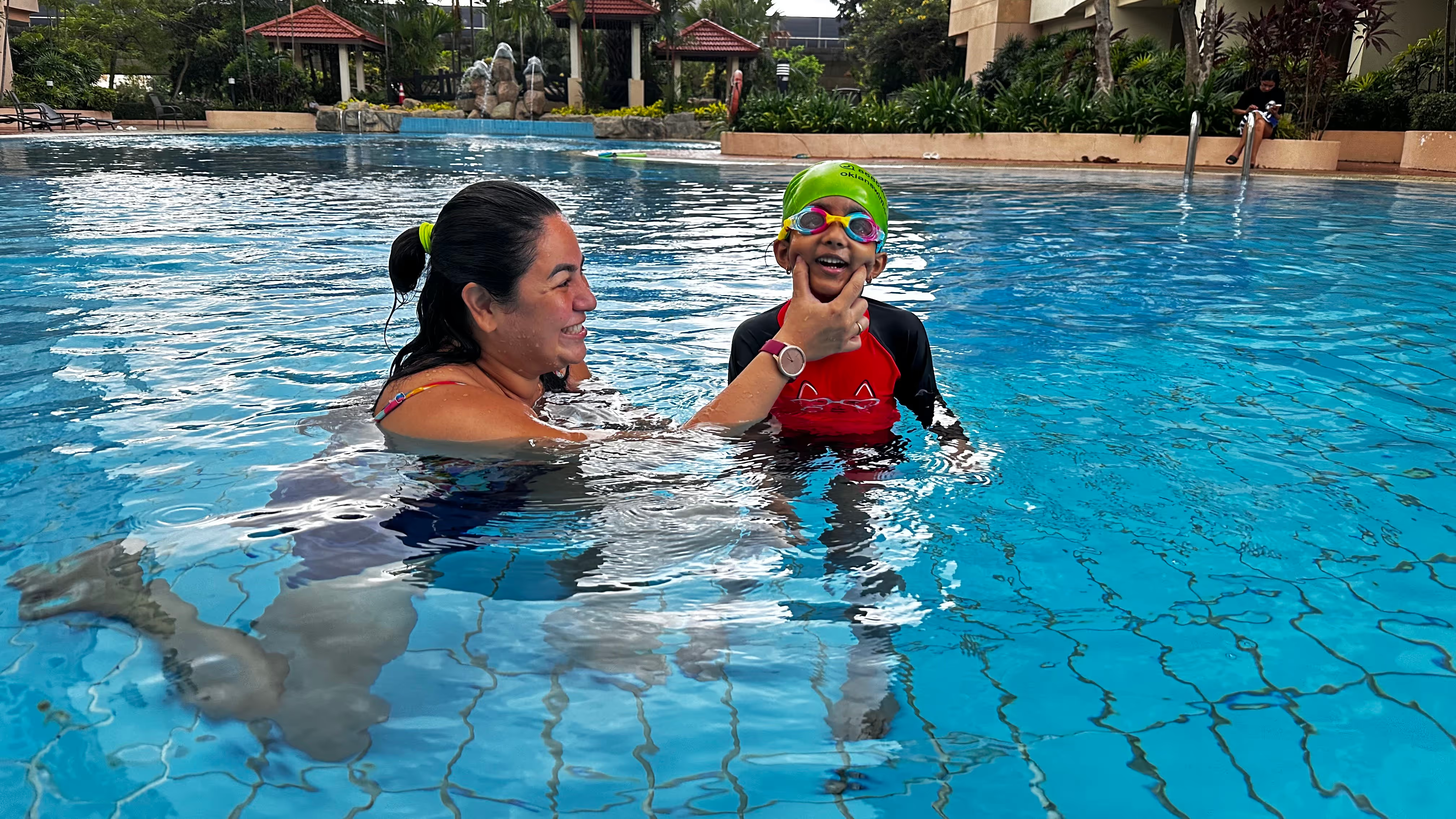


Easiest to Learn, Hardest to Master: Why Breaststroke Is the Stroke That Teaches Patience
What you'll learn in this article:
- Why breaststroke is called the "survival stroke" and why we teach it as the second stroke at Swim Class Singapore
- The difference between the frog kick (easy shortcut) and the proper whip kick—and why teaching the right technique from day one matters
- How the arm-leg sequence and glide phase work together, and why self-taught swimmers get this wrong
- The technical coaching required to build correct breaststroke habits in children
- Why breaststroke looks simple but demands precision, timing, and patience to master
Breaststroke: Easiest to Learn, Hardest to Master
If you've ever watched a child learn to swim, you've probably noticed that breaststroke looks easy. Kids instinctively do a frog-like motion—legs bend and push out, arms pull, and they move forward. Parents often think their child has "got it" after just a few lessons. But here's the truth that separates casual swimmers from confident, efficient ones: breaststroke is deceptively simple. It's the easiest stroke to start, but it's also the hardest to truly master.
This paradox is exactly why we teach breaststroke as the second stroke at Swim Class Singapore, right after freestyle. And it's also why breaststroke requires something freestyle doesn't: relentless coaching attention to detail and a willingness from children to be patient with the process.
Why Breaststroke Is the Survival Stroke
Breaststroke has earned a special place in swimming for a simple reason: it keeps your head above water naturally. Unlike freestyle, where your head goes in and out of the water, breaststroke lets you see where you're going. Your face stays mostly clear of the surface, your breathing is straightforward, and you can move steadily without gasping. This makes it the survival stroke—the one that works when you need to swim a long distance, conserve energy, or stay aware of your surroundings.
For children, this is exactly why we introduce it second. After they've built confidence and basic skills with freestyle, breaststroke teaches them a completely different rhythm. It's a stroke you can sustain. It's practical. And if taught correctly from the start, it becomes a tool they'll use for life—whether that's a casual swim at the beach, a long-distance swim, or an actual emergency.
But—and this is crucial—breaststroke only works as a survival stroke when it's done right. A sloppy breaststroke isn't efficient, isn't fast, and won't help you in a real situation.
The Frog Kick Trap
Here's where most swimming instruction goes wrong, especially with children who learn casually or from online videos.
When kids first try breaststroke, they naturally default to what looks like a frog: legs bent, feet apart, quick push-out, then back together. It works. They move forward. Parents smile. But this "frog kick" is actually a shortcut—a habit that feels right but isn't technically correct.
The proper breaststroke kick—what we call the whip kick—is much more technical. It requires:
- Legs bent at the knees, heels close to the bottom
- Feet flexed outward and wide apart
- A quick, powerful closing motion that whips the legs together
- Precise timing and body awareness
Most children can't see their own legs underwater, so they have to feel the movement. They have to trust the coach's guidance and build the muscle memory through repetition. There's no shortcut, no visual confirmation. Just feel, feedback, and patience.
Here's why this matters: once a child learns the frog kick, retraining them to the proper whip kick is brutally difficult. Bad habits calcify. In a swim meet, they won't even understand why their stroke feels different from other swimmers' or why they're not moving as efficiently. By then, it's too late—the habit is locked in.
At Swim Class Singapore, we teach the correct whip kick from day one. Yes, it's harder for beginners. Yes, it takes more coaching. But it's the only way to build a foundation that actually works.
The Sequence That Changes Everything: Pull, Kick, Glide
Now let's talk about what separates a competent breaststroke from a masterful one. And this is where self-taught swimmers—especially those learning from YouTube—consistently fail.
In breaststroke, there's a specific sequence: pull with your arms, followed by a quick whip kick, followed by a glide phase. This glide is everything.
Here's what happens when you skip it: your arms finish pulling, your legs start kicking at the same time, and your hands start pulling again before you've finished gliding. You're constantly working. Your arms and legs are moving simultaneously. It looks fast. It feels fast. But you're actually stopping yourself mid-stroke. You're creating resistance instead of momentum. You're exhausted after fifty metres instead of gliding through two hundred.
This is the YouTube breaststroke trap. Self-taught swimmers don't understand the pause. They think more movement equals more speed. The opposite is true.
The proper rhythm is: pull with your hands, quick whip kick, then count—one thousand, two thousand, three thousand—while you glide. That glide is where your momentum carries you forward. It's the fastest, most efficient part of the stroke. Without it, you're swimming in place while exhausting yourself.
We teach children to count out loud during practice: "Pull, kick, glide... one thousand, two thousand, three thousand. Pull, kick, glide..." This builds the rhythm into their muscle memory. The glide becomes automatic. They stop thinking about it and start feeling it.
Our Progression: Building Breaststroke the Right Way
Just like freestyle, we build breaststroke methodically. But because it's so technical, every step requires coaching focus.
Step One: Gliding
We start with gliding. A child pushes off the wall in a streamlined position—just like in freestyle. This reminds them what efficiency feels like. It's the baseline.
Step Two: The Whip Kick
Next, we introduce the whip kick. On a kickboard, holding the wall, or with a coach's hands for support, children practice the leg motion: bend, flex feet wide, powerful close. We emphasise the flex and the width because that's where most children struggle—they can bend their legs, but opening their feet wide and closing powerfully is the part that requires guidance.
This is slow, repetitive work. We do it from the wall. We do it on kickboards. We do it in vertical positions. And we do it a lot. Because without this foundation, everything that comes later falls apart.
Step Three: Adding the Arms
Once the kick is solid, we add the arm pull. But now comes the hardest part: the timing. Pull, quick kick, glide. Pull, quick kick, glide. The glide phase is non-negotiable. If a child tries to speed up by skipping the glide, we slow them down and rebuild the rhythm.
Step Four: Breathing and Full Stroke
Finally, we add breathing. Children learn to inhale during the glide phase—when their body is highest in the water and most stable. This is where breaststroke becomes elegant. When it's done right, the breathing is natural, the stroke is rhythmic, and the child moves forward with minimal effort.
Coaches' Tips: What We Emphasise
Throughout the progression, we hammer home several non-negotiables:
The glide phase is not optional. It's a rest—it's the engine of the stroke. Without it, you're not swimming breaststroke; you're thrashing.
The whip kick requires ankle flexibility and power. Tight ankles or weak foot muscles will limit your efficiency. Stretching matters.
Timing is everything. Breaststroke is about rhythm, not speed. A child who masters the rhythm will always out swim a child who's trying to go fast.
Self-taught shortcuts—frog kicks, simultaneous arm-leg movement, no glide—are habits that lock in fast. Once locked in, they're nearly impossible to break. This is why coaching from the start is so important.
Why Breaststroke Demands Patience
Freestyle is about confidence and basic technique. Breaststroke is about precision and patience. A child learning freestyle might feel like they're "getting it" after a few weeks. A child learning breaststroke might take months to develop the feel for the glide phase, the timing, the whip kick.
This is normal. This is correct. Breaststroke teaches a lesson that goes beyond swimming: sometimes the easy way isn't the right way. Sometimes mastery requires slowing down, focusing on details, and trusting the process even when progress feels invisible.
If your child is learning breaststroke and the progression feels slow, that's exactly what should be happening. You're not watching them waste time. You're watching them build a habit that will last a lifetime. And when they finally feel that glide phase click—when their body understands the rhythm—that's when breaststroke becomes beautiful.
The swimmers who struggle with breaststroke are almost always the ones who rushed the process or learned the shortcuts first. The ones who thrive are the ones who trusted the patience, embraced the precision, and let their coach guide every detail.
Breaststroke is easiest to learn and hardest to master for a reason. And that reason is exactly why it's worth learning right.
Frequently Asked Questions
Why is breaststroke considered the survival stroke?
Because it keeps your head naturally above water and lets you breathe without turning to the side, making it sustainable for long distances or situations where you need to stay aware of your surroundings.
What's the difference between a frog kick and a proper whip kick?
The frog kick is a self-taught shortcut where legs bend and push out simultaneously; the proper whip kick involves feet flexed outward, wide apart, then a powerful precise closing motion — it's more technical but far more efficient.
Why does breaststroke take longer to master than freestyle?
It requires precise timing between the pull, kick, and glide phases, plus a kick technique that swimmers can't visually confirm underwater — they have to feel it, which takes more repetition to build correctly.
What is the glide phase and why does it matter?
It's the pause after the kick where the body coasts forward using built-up momentum. Skipping it means constantly working against the water instead of moving efficiently through it — it's the difference between swimming and thrashing.
Can bad breaststroke habits be fixed later?
It's possible but difficult — habits like the frog kick calcify quickly, which is why coaching the correct whip kick from the very first lesson matters more than it might seem.
Want to learn different stroke? 👇
Want to learn all the swim strokes: Click 👈
Ready to find a suitable coach? Check swimming lesson availability for your preferred area and schedule.
Why Parents Love Swimming Lessons at Swim Class Singapore
Parents across Singapore trust Swim Class because we focus on both safety and fun.


Our lessons emphasize child-friendly teaching methods, small group attention, clear progression and skill development, and positive, encouraging instructors who help every child build confidence in the water.
Most importantly, we help kids build confidence in the water while enjoying every lesson.
Frequently Asked Questions About Kids Swimming Lessons
Everything parents usually ask before their little swimmer jumps in — from safety and schedules to choosing the right class.
Absolutely. Our baby swimming classes in Singapore are designed with safety as the top priority. Lessons are parent-assisted and led by certified swim instructors who specialize in helping babies and toddlers feel comfortable, confident, and happy in the water. Every session is gentle, structured, and designed to make those first splashes a positive experience.
It’s easier than you might think. Our kids swimming lessons in Singapore are organized by age and skill level, from baby swimming to beginner and intermediate programs. Simply share your child’s age and swimming experience, and we’ll recommend the class that helps them learn, progress, and enjoy the water at their own pace.
Yes, we offer swimming lessons at both condo pools and public swimming complexes across Singapore. This gives families the flexibility to choose the location that is most convenient for them.Lessons at public swimming pools are open to all students who want to join our swim classes.Lessons conducted at condo pools are available for residents of that condominium only, in accordance with condo management rules. If you live in a condo with a pool, we can arrange lessons right at your residence for added convenience.Just let us know your preferred location, and we’ll help match you with the best swimming lesson option in Singapore for your little swimmer.
Both options are available. We run swimming lessons at condo pools and public swimming complexes across Singapore, so you can choose the location that’s most convenient for your family. Once you tell us your preferred area, we’ll match you with a coach nearby.
Children can begin baby swimming lessons from around 6 months old. Starting early helps babies develop water confidence, basic safety awareness, and comfort in the pool — all while having fun and bonding with their parents.
Yes, we do. Our instructors provide SwimSafer preparation lessons in Singapore, helping children develop the swimming skills and water safety knowledge needed for the national SwimSafer programme. Lessons focus on both technique and confidence so kids feel ready for the next stage.
Still Curious? Let’s Chat!
Got a question about baby swimming, kids swimming lessons, or SwimSafer prep in Singapore? Our friendly team is happy to help you find the perfect class for your little swimmer.
Book your child's first lesson
Start your child’s swimming journey in Singapore with certified coaches who specialize in baby and kids swimming lessons. We’ll help your little swimmer build confidence, safety skills, and strong swimming technique from the very first splash.