
Freestyle: Why It's the First Stroke and Why Your Legs Are Your Secret Weapon
What you'll learn in this article:
- Why freestyle (front crawl) is almost always the first stroke taught to children and beginners
- The surprising reason most self-taught swimmers struggle—and why it has nothing to do with their arms
- Why coaches spend so much time on leg work, and why that's actually the fastest path to confident swimming
- Our step-by-step teaching progression at Swim Class Singapore: from first breath to full stroke
- What parents should expect to see during lessons, and why it looks the way it does
When most people think about learning to swim, they think about freestyle, also known as front crawl. It's the stroke you see most often—at the beach, in pools, in the Olympics. But have you ever wondered why it's usually the first stroke children learn? The answer is simpler than you might think, and understanding it actually reveals something important about how your body works in water.
Why Freestyle Comes First
Freestyle is taught first because it's the most forgiving stroke to learn. Unlike breaststroke, which requires specific timing and coordination between your arms and legs, freestyle is relatively straightforward. Your arms and legs work in a more natural rhythm, and the basic movement feels less foreign to how we move on land. Plus, it's honest—if you're doing it badly, you'll sink. If you're doing it well, you'll move forward. There's immediate feedback, which makes it excellent for beginners.
Another reason freestyle dominates learn-to-swim programmes is that many people pick it up naturally, even without formal lessons. Put someone in the water and tell them to move forward, and they'll often default to a freestyle-like motion. This self-teaching tendency is actually quite revealing. You'll notice that self-taught swimmers almost always focus on their arms first. They thrash their hands about, thinking that's what propels them. Meanwhile, their legs dangle uselessly below them. And yes, they'll be exhausted after a few metres.
The Problem with Learning Hands First
Here's the thing about hands: we use them for absolutely everything in life. We eat, we write, we gesture, we work. Your hands are tools you've been mastering since infancy. So when you jump into the water, it feels natural to lead with your hands. They're visible, they're what you see when you look down, and they feel like they're "doing" the swimming.
But this is where most self-taught swimmers go wrong, and it's also why having a coach matters so much.
The truth is, legs are doing the heavy lifting—literally. Your legs create buoyancy. They keep your body high in the water. They reduce drag by maintaining a horizontal position. Without strong, coordinated legs, even the most powerful arms will struggle. You'll feel like you're working twice as hard to move half as fast. That's exhaustion, not swimming.
Professional swimmers understand this deeply. If you watch how elite swimmers train, you'll notice they spend significantly more time on kicking drills than arm work. Why? Because legs are the foundation. They're where you build the core strength, the body position, and the rhythm that everything else depends on.
Why Your Body Needs Leg Training
In everyday life, your hands are more important. But in water, your legs become your best friend. They provide the propulsion, yes, but more importantly for beginners, they provide the float. A beginner with strong legs and weak arms will always out swim a beginner with strong arms and weak legs.
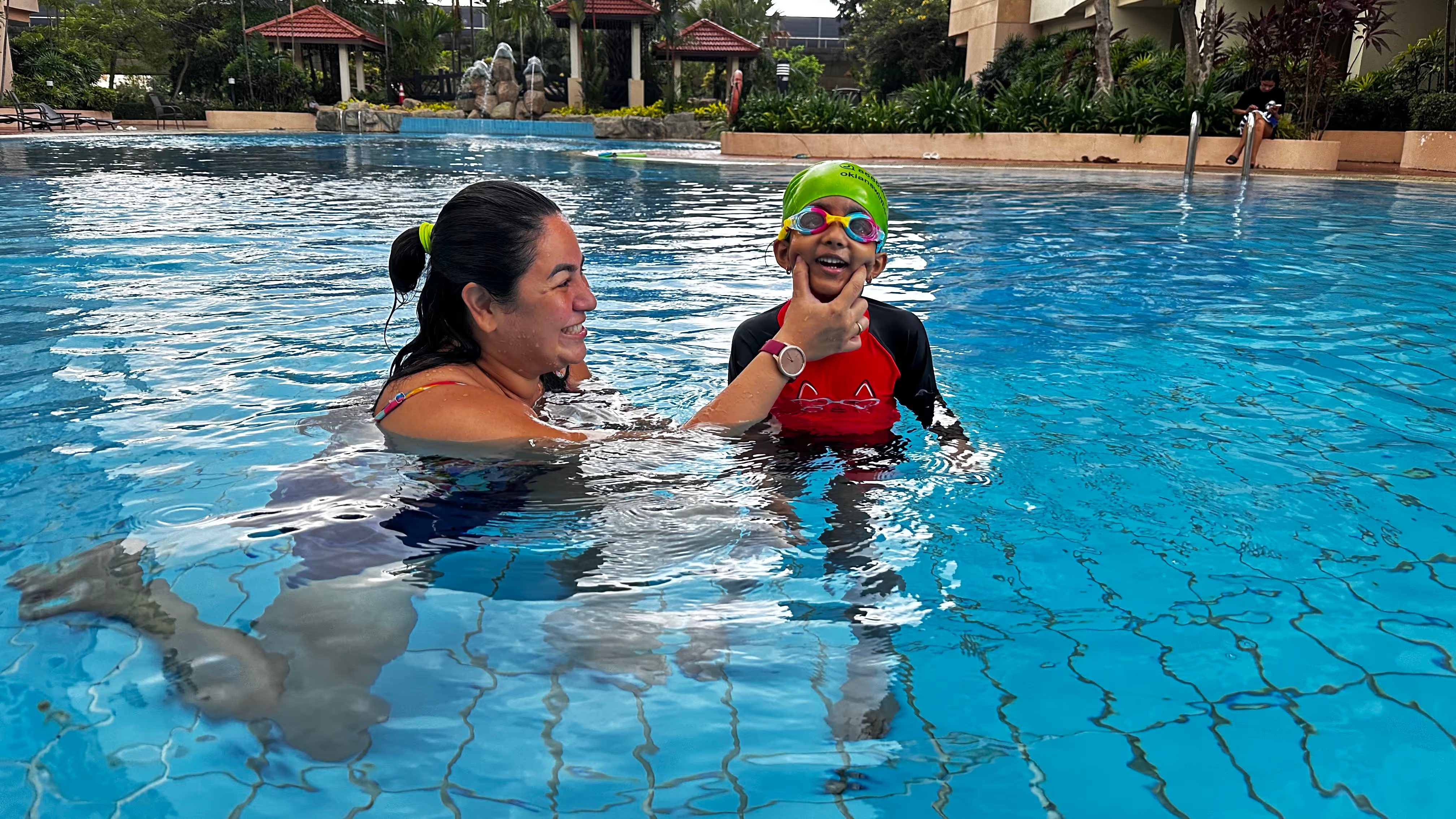
At Swim Class Singapore, we emphasise legs heavily in every session, even when it might look repetitive to parents watching from the side. There's a reason: building that leg strength and kick timing is the difference between a child who feels confident in the water and one who panics because they're sinking.
Our Progression: How We Build Freestyle From the Ground Up
When we teach freestyle, we follow a specific progression that ensures every building block is solid before moving to the next.
Step One: Breathing and Breath Control
We start with the absolute fundamentals: breathing and holding your breath. This sounds basic, but it's critical. Children need to feel comfortable with water around their face, comfortable exhaling into the water, and comfortable holding their breath on command. These aren't just swimming skills—they're confidence builders. Once a child trusts their breathing, everything else becomes possible.
Step Two: The Starfish Float
Next comes the starfish float—both on the front and on the back. Here, the child lies in the water with arms and legs spread wide, like a starfish, and experiences what it feels like to be supported by the water. This is where buoyancy becomes real and tangible. On the back, it feels safe and natural. On the front, it requires a bit more trust, but it's the foundation for everything that comes next.
Step Three: Rocket or Pencil Hold
Once the starfish float is comfortable, we introduce the rocket or pencil hold. Here, the child brings their arms and legs together, streamlining their body like a rocket or pencil. This teaches body position and introduces the idea that a streamlined shape moves through water more efficiently. It's a small shift, but it's teaching a principle that applies to all swimming.
Step Four: Gliding
With breathing and floating under their belt, we introduce gliding. A child pushes off from the wall in a streamlined position and glides as far as they can. This teaches them what efficient movement feels like and how body position affects speed. It's also a confidence moment—many children are surprised by how far they can travel just by pushing off and staying still.
Step Five: Kicking—The Real Foundation
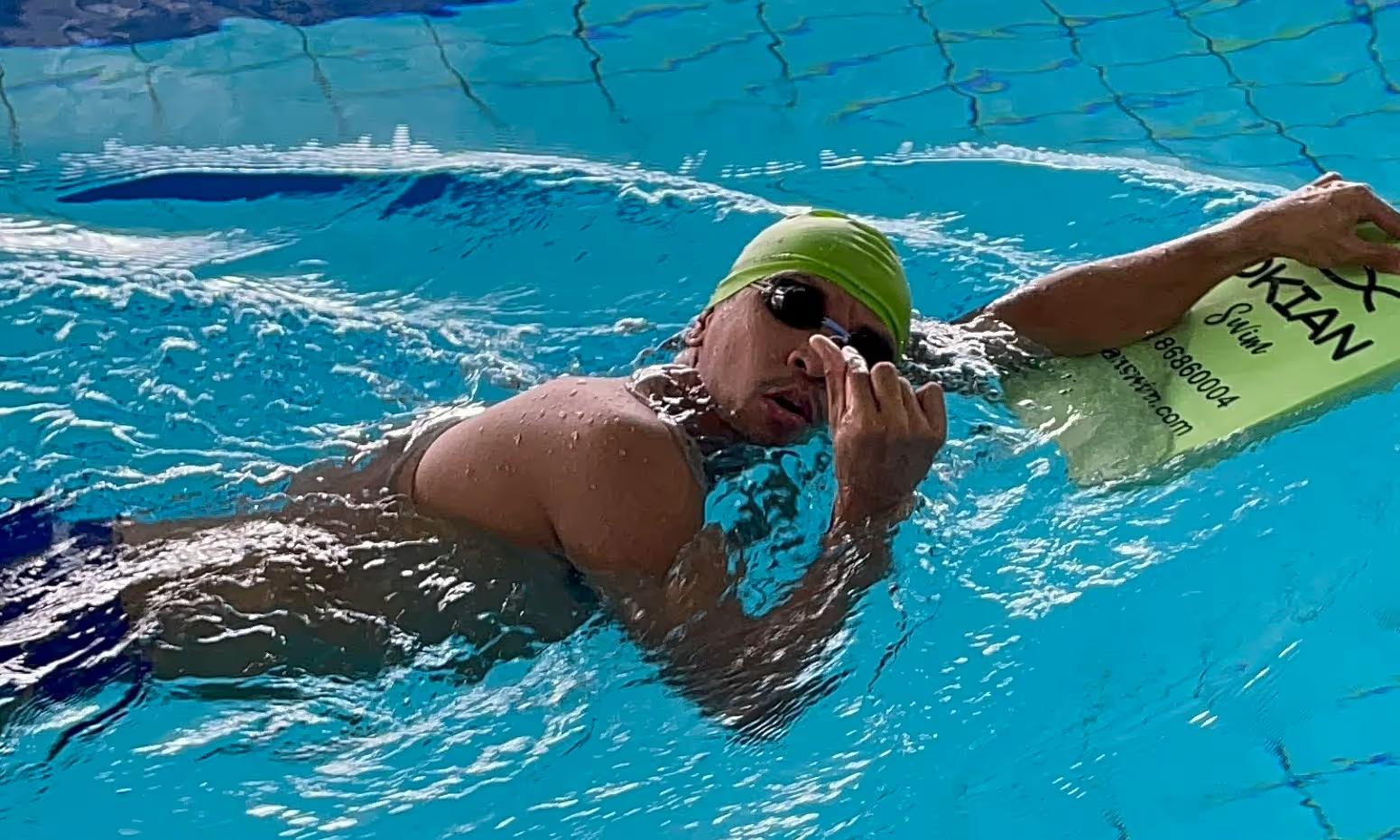
Now we spend serious time on kicking. This is where patience pays off. We use kickboards, we do flutter kicks on our backs, we kick in vertical positions. Some of this might look monotonous, but here's what's actually happening: we're building the muscle memory, the strength, and the rhythm that your entire freestyle will depend on.
This is also where the coaching advantage becomes obvious. A self-taught swimmer typically skips this phase or rushes through it. They want to get to the "real" swimming—the stroking part. But without solid kicking, they'll always be fighting the water. With our coaches, children spend the time they need here, and it transforms everything that comes after.
Step Six: Adding the Stroke
Finally, we add the arm stroke. By this point, the child's legs are already doing their job beautifully. The arms are just the finishing touch. And because the foundation is solid, the stroke feels natural rather than desperate.
Coaches' Tips: What We Emphasise
Throughout this progression, our coaches emphasise several key points:
Keep your core engaged and your body as horizontal as possible. This reduces drag significantly. Your head should be neutral—looking down at the bottom of the pool—not forward. Turn your head to breathe, but keep it aligned with your spine. And perhaps most importantly: trust your legs. Your instinct might be to pull harder with your arms when you're tired, but the real solution is always stronger, steadier legs.
Why This Matters for You as a Parent
If your child is learning freestyle and you're seeing a lot of kicking drills, that's exactly what should be happening. It might look repetitive, but it's building the foundation that will make them a confident, efficient swimmer for life. And if you're learning as an adult and feeling frustrated that your coach keeps sending you back to kicking work, remember: you're not wasting time. You're building the engine that powers everything else.
Freestyle might be the easiest stroke to start with, but it's still a skill that requires patience, progression, and proper coaching. The swimmers who struggle are almost always the ones who skipped the leg work. The ones who thrive are the ones who trusted the process.
Frequently Asked Questions
Why is freestyle taught before other strokes?
It's the most forgiving stroke for beginners — the arm and leg coordination feels closer to natural movement, and many people attempt a freestyle-like motion instinctively even without formal lessons.
Why do coaches spend so much time on kicking drills?
Because legs provide buoyancy and body position, not just propulsion — a swimmer with strong legs and weak arms will almost always outperform one with the opposite, especially as a beginner.
Why do self-taught swimmers often struggle with freestyle?
They tend to lead with their hands (since hands are what we use for everything on land) while neglecting leg work, which leaves them fighting the water instead of gliding through it.
What should a child's head position look like during freestyle?
Neutral, looking down at the bottom of the pool, aligned with the spine — turning only to breathe, not lifting forward, which helps maintain a horizontal, low-drag body position.
How long does it take to build a solid freestyle foundation?
It varies by child, but the foundational sequence — breathing, floating, gliding, then kicking — typically takes several weeks of consistent lessons before the arm stroke is even introduced.
If you want to learn more about breaststroke, which teaches a very different lesson about timing and coordination, read our full guide to breaststroke here.
Want to learn all the swim strokes: Click 👈
Ready to find a suitable coach? Check swimming lesson availability for your preferred area and schedule.
Why Parents Love Swimming Lessons at Swim Class Singapore
Parents across Singapore trust Swim Class because we focus on both safety and fun.


Our lessons emphasize child-friendly teaching methods, small group attention, clear progression and skill development, and positive, encouraging instructors who help every child build confidence in the water.
Most importantly, we help kids build confidence in the water while enjoying every lesson.
Frequently Asked Questions About Kids Swimming Lessons
Everything parents usually ask before their little swimmer jumps in — from safety and schedules to choosing the right class.
Absolutely. Our baby swimming classes in Singapore are designed with safety as the top priority. Lessons are parent-assisted and led by certified swim instructors who specialize in helping babies and toddlers feel comfortable, confident, and happy in the water. Every session is gentle, structured, and designed to make those first splashes a positive experience.
It’s easier than you might think. Our kids swimming lessons in Singapore are organized by age and skill level, from baby swimming to beginner and intermediate programs. Simply share your child’s age and swimming experience, and we’ll recommend the class that helps them learn, progress, and enjoy the water at their own pace.
Yes, we offer swimming lessons at both condo pools and public swimming complexes across Singapore. This gives families the flexibility to choose the location that is most convenient for them.Lessons at public swimming pools are open to all students who want to join our swim classes.Lessons conducted at condo pools are available for residents of that condominium only, in accordance with condo management rules. If you live in a condo with a pool, we can arrange lessons right at your residence for added convenience.Just let us know your preferred location, and we’ll help match you with the best swimming lesson option in Singapore for your little swimmer.
Both options are available. We run swimming lessons at condo pools and public swimming complexes across Singapore, so you can choose the location that’s most convenient for your family. Once you tell us your preferred area, we’ll match you with a coach nearby.
Children can begin baby swimming lessons from around 6 months old. Starting early helps babies develop water confidence, basic safety awareness, and comfort in the pool — all while having fun and bonding with their parents.
Yes, we do. Our instructors provide SwimSafer preparation lessons in Singapore, helping children develop the swimming skills and water safety knowledge needed for the national SwimSafer programme. Lessons focus on both technique and confidence so kids feel ready for the next stage.
Still Curious? Let’s Chat!
Got a question about baby swimming, kids swimming lessons, or SwimSafer prep in Singapore? Our friendly team is happy to help you find the perfect class for your little swimmer.
Book your child's first lesson
Start your child’s swimming journey in Singapore with certified coaches who specialize in baby and kids swimming lessons. We’ll help your little swimmer build confidence, safety skills, and strong swimming technique from the very first splash.