
Mastering the Backstroke: A Parent's Guide to Technique, Confidence, and Fun
Swimming the backstroke is one of the most unique and enjoyable experiences in the pool. It is the only stroke swum entirely on the back, allowing children to breathe freely with their face out of the water. For many young swimmers, this makes backstroke the first stroke where they truly feel relaxed and in control.
However, the lack of visual reference points can make it tricky to master. That's why swimming lessons that focus on proper technique from the start are so important—especially when it comes to building confidence in the water.
Whether you are a parent looking for swimming lessons Singapore that prioritize safety and skill development, or a triathlete wanting to improve endurance, understanding the mechanics is key to swimming faster and avoiding injury.
Here are the key benefits of mastering the backstroke:
- Improves Posture: Strengthens the upper back and shoulders, counteracting the "hunched over" posture caused by desk work and screen time—great for growing children.
- Balances Your Workout: Provides a perfect counter‑stroke to freestyle, balancing the muscle groups used in swimming.
- Unlimited Breathing: Since your face is out of the water, there is no need to time your breaths with your arm strokes. This makes it an ideal stroke for beginners to build water confidence.
- Great for Spinal Health: The horizontal body position alleviates pressure on the spine, making it a safe and effective stroke for all ages.
- Builds Core Strength: A strong, stable core is essential for keeping the body flat. In our classes, we emphasize kicking drills that naturally engage the abdominals—helping young swimmers develop strength without even realizing it.
The Perfect Body Position: "Belly Button Up"
The biggest mistake new backstrokers make is sitting in the water. If the hips are too low, it creates drag—like swimming with a parachute attached to your waist. For children, learning this body position early sets the foundation for all four competitive strokes.
We use simple cues that kids understand instantly. Instead of saying "engage your core" or "keep your hips high," we say:
"Belly button up!"
When a child pushes their belly button toward the surface, their hips naturally rise. This simple phrase helps them feel what a proper body position should be—without overcomplicating it.
To achieve a sleek, fast position:
- Belly button up: Tighten the tummy muscles and lift the belly toward the ceiling. This keeps the hips high and reduces drag.
- Head back: Look straight up at the ceiling or sky. If you're a parent watching, remind your child to "count the lights" or "look at the clouds." Do not look at your feet—looking down lifts the hips, but looking too far forward sinks them.
- Ears in the water: Ideally, the water should be lapping at the middle of your ears. If water splashes over the face, that's a good sign—it means the head is in the right position.
Why We Emphasize Legs: The Foundation of Every Stroke
In our swimming lessons, we spend a lot of time on leg work—and for good reason. The flutter kick is the engine of the backstroke. Strong, consistent kicking does three things:
- It keeps the hips up. Without a steady kick, the legs sink, and the body position falls apart.
- It builds core strength. Kicking from the hips (not the knees) engages the abdominal and lower back muscles. A strong core helps in every stroke, including freestyle and breaststroke.
- It develops confidence. When a child knows they can kick across the pool on their back, they feel safe and in control—even if their arms aren't moving yet.
We often tell parents: "If you want your child to swim faster and more efficiently, focus on the legs first." That's why our beginner classes include plenty of kick‑board drills, back‑float kicking, and fun games that strengthen the legs without feeling like work.
The Flutter Kick (Kid‑Friendly Style)
The backstroke uses a flutter kick similar to freestyle, but the orientation is different. Here's how we teach it to children:
- Kick from the hips: Pretend your legs are long, straight noodles. The movement starts at your hips, not your knees. We tell kids: "Make small, splash‑less kicks. If your knees come out of the water, you're bending too much."
- Ankles relaxed: Keep your ankles loose and toes pointed like a ballerina. Stiff ankles act like brakes. A fun way to practice: take off your flip‑flops and point your toes—that's the feeling.
- Narrow kick: Keep your kicks within the width of your shoulders. A wide, bicycle‑like kick creates drag. We tell kids: "Pretend your legs are inside a narrow tube."
The Arm Cycle: "Windmill Arms"
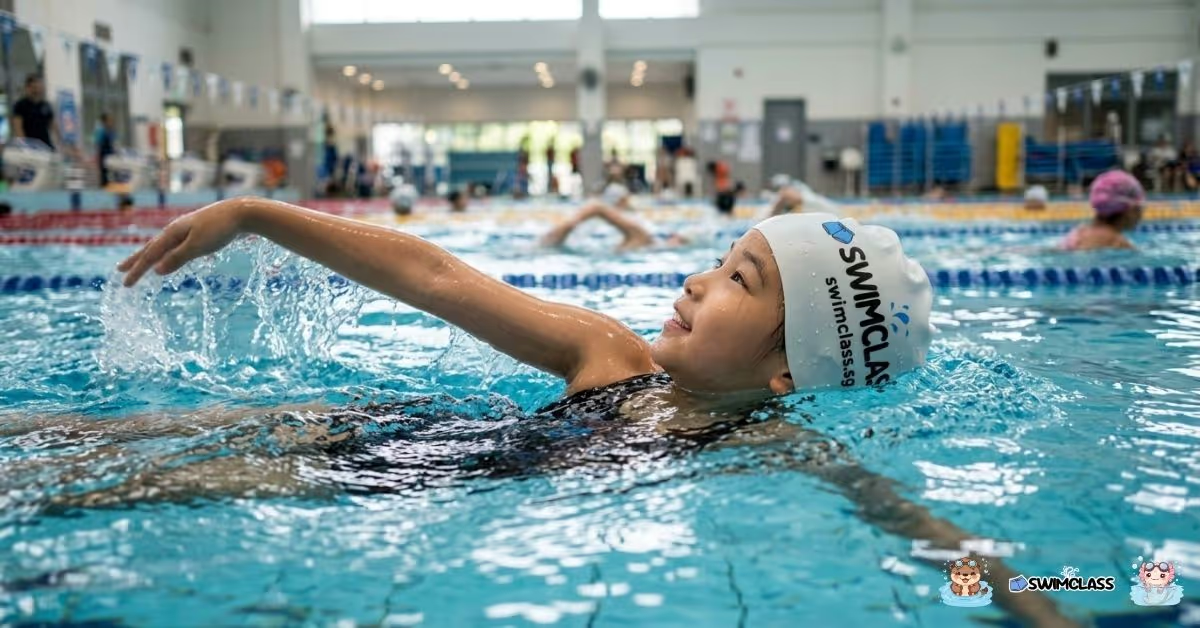
The backstroke arm movement is continuous and rhythmic. We tell kids to imagine they are making windmills with their arms—one arm goes, then the other, without stopping.
- The Entry (Pinky First): Your pinky finger should enter the water first. Avoid slapping the water; reach long and glide. We say: "Reach for a toy that's far away, then gently slide your hand into the water."
- The Catch & Pull (The Strong Part): Once your hand enters, bend your elbow to about a 90‑degree angle. Press the water down toward your thigh with a strong, steady force. We call this "pulling the water like you're climbing a ladder."
- The Finish (Thumb Exits): As your hand reaches your hip, turn your palm toward your thigh (thumb exiting first) to finish the push. At the same time, your other arm should be starting its entry—this keeps you moving smoothly.
Breathing and Rotation: Rolling Like a Log
Unlike other strokes, breathing isn't the challenge here—rotation is. Because your face stays out of the water, you can breathe freely at any time. The real key to a smooth backstroke is learning to roll your body from side to side as you swim.
Think of your body like a log floating in the water. As one arm pulls, your body should roll slightly onto that side. Then, as the other arm pulls, you roll onto the other side. This rolling motion does two important things:
- It helps you reach farther with each stroke
- It lets you use your strong back muscles instead of just your shoulders
Here's how to explain rotation to your child:
"Pretend you're a hot dog on a rolling grill. When your right arm pulls, roll onto your right side. When your left arm pulls, roll onto your left side. Your belly button should face the side, not the ceiling."
As for breathing, since your face is already out of the water, you don't need to worry about timing. Encourage your child to take a breath whenever they feel comfortable—usually as one arm is recovering (coming out of the water). The goal is to stay relaxed and avoid holding their breath.
Fun Drills to Practice at Home (or in the Pool)
Here are three simple drills we use in swimming lessons Singapore to help children master backstroke. You can ask your coach to incorporate these, or practice them during family swim time.
Back Float with Kick
This drill helps children get comfortable on their back while learning the correct body position and kick.
How to do it: Have your child lie on their back with arms stretched out to the sides like a starfish. They should look straight up at the ceiling or sky. Then, have them make small, steady kicks from their hips while keeping their belly button pushed up toward the surface.
What it teaches: Body position and flutter kick
Kid‑Friendly Cue: "Arms like starfish, belly button up, and make tiny splashes with your feet."
One‑Arm Backstroke
This drill simplifies the arm movement so children can focus on one arm at a time and learn how rotation works.
How to do it: Have your child keep one arm resting at their side while the other arm performs the full backstroke motion. The resting arm stays straight along their body. As the working arm pulls, encourage them to roll onto that same side. After a few laps, switch arms.
What it teaches: Arm coordination and rotation
Kid‑Friendly Cue: "One arm stays at your side. Roll to the side of the arm that's pulling."
Pinky‑First Reaches
Many beginners slap the water with their hand or enter with the thumb first. This drill teaches the correct entry that creates less splash and more reach.
How to do it: Have your child practice reaching back with a straight arm, making sure their pinky finger enters the water first. They should reach as far as they can—almost like they're trying to grab something behind them—before starting the pull.
What it teaches: Proper arm entry
Kid‑Friendly Cue: "Reach high to the sky, then show your pinky to the ceiling before it touches the water."
Common Mistakes to Avoid (And How to Fix Them)
Even experienced swimmers fall into these traps. Here is how to fix them—with child‑friendly language.
- Bending knees too much
Fix: "Kick from your hips, not your knees. Pretend your legs are straight, long pencils." - Crossing over midline
Fix: "Reach for the lane line next to you, not the middle of your body." - Sitting in the water
Fix: "Push your belly button up to the sky and tuck your chin back." - Bending the elbow during recovery
Fix: "Keep your arm straight like a stick as it goes back to the water."
Building Confidence Through Quality Instruction
For many mothers, the decision to enroll a child in swimming lessons Singapore comes down to two things: safety and the right teaching approach. Backstroke is a stroke that builds water confidence naturally—because the face stays out, children can relax and focus on body control. A structured environment with patient coaches makes all the difference.
When you're looking for a swim school, consider these questions:
- Do the coaches use age‑appropriate cues (like "belly button up") that your child can understand?
- Is there a strong emphasis on fundamentals—especially kicking and body position?
- Are classes kept small so your child gets individual attention?
If you're looking for a place where technique meets fun, swimclass.sg offers small‑group and private lessons tailored to every age and skill level. Their instructors focus on foundational skills, so young swimmers learn proper form from the start—whether it's backstroke, freestyle, or just becoming comfortable in the water.
Conclusion
The backstroke is a beautiful, graceful stroke that builds strength, improves posture, and gives children the freedom to breathe naturally while swimming. By using simple cues like "belly button up" and emphasizing the legs as the foundation, young swimmers can master this stroke faster and with more confidence.
Start by practicing the flutter kick on the back with arms at the sides. Once your child feels stable, add in the alternating arm movements. And if you're ready to give your child a strong start, exploring quality swimming lessons in a supportive environment is the best next step.
With patience, the right instruction, and a little fun, your child will soon be gliding across the pool on their back—counting the lights on the ceiling and loving every minute of it.
Frequently Asked Questions
Why is backstroke often easier for nervous beginners?
Because the face stays out of the water the entire time, there's no need to time breathing with strokes — which removes one of the biggest sources of anxiety for new swimmers.
What does "belly button up" actually mean in backstroke?
It's a cue for keeping the hips high at the water's surface by engaging the core. Sinking hips create drag, similar to swimming with resistance attached to the waist.
Why do coaches emphasize leg work so much in backstroke?
A steady flutter kick keeps the hips up and builds the core strength needed for good body position — without it, the whole stroke structure collapses regardless of arm technique.
What's the most common backstroke mistake?
Sitting too low in the water (weak hips) and bending the knees too much during the kick, both of which create drag and slow the swimmer down significantly.
How does body rotation improve backstroke?
Rolling the body side to side with each arm pull (like a log rolling) allows swimmers to reach farther and use stronger back muscles instead of relying on the shoulders alone.
Want to learn different stroke? 👇
Want to learn all the swim strokes: Click 👈
Ready to find a suitable coach? Check swimming lesson availability for your preferred area and schedule.
Why Parents Love Swimming Lessons at Swim Class Singapore
Parents across Singapore trust Swim Class because we focus on both safety and fun.


Our lessons emphasize child-friendly teaching methods, small group attention, clear progression and skill development, and positive, encouraging instructors who help every child build confidence in the water.
Most importantly, we help kids build confidence in the water while enjoying every lesson.
Frequently Asked Questions About Kids Swimming Lessons
Everything parents usually ask before their little swimmer jumps in — from safety and schedules to choosing the right class.
Absolutely. Our baby swimming classes in Singapore are designed with safety as the top priority. Lessons are parent-assisted and led by certified swim instructors who specialize in helping babies and toddlers feel comfortable, confident, and happy in the water. Every session is gentle, structured, and designed to make those first splashes a positive experience.
It’s easier than you might think. Our kids swimming lessons in Singapore are organized by age and skill level, from baby swimming to beginner and intermediate programs. Simply share your child’s age and swimming experience, and we’ll recommend the class that helps them learn, progress, and enjoy the water at their own pace.
Yes, we offer swimming lessons at both condo pools and public swimming complexes across Singapore. This gives families the flexibility to choose the location that is most convenient for them.Lessons at public swimming pools are open to all students who want to join our swim classes.Lessons conducted at condo pools are available for residents of that condominium only, in accordance with condo management rules. If you live in a condo with a pool, we can arrange lessons right at your residence for added convenience.Just let us know your preferred location, and we’ll help match you with the best swimming lesson option in Singapore for your little swimmer.
Both options are available. We run swimming lessons at condo pools and public swimming complexes across Singapore, so you can choose the location that’s most convenient for your family. Once you tell us your preferred area, we’ll match you with a coach nearby.
Children can begin baby swimming lessons from around 6 months old. Starting early helps babies develop water confidence, basic safety awareness, and comfort in the pool — all while having fun and bonding with their parents.
Yes, we do. Our instructors provide SwimSafer preparation lessons in Singapore, helping children develop the swimming skills and water safety knowledge needed for the national SwimSafer programme. Lessons focus on both technique and confidence so kids feel ready for the next stage.
Still Curious? Let’s Chat!
Got a question about baby swimming, kids swimming lessons, or SwimSafer prep in Singapore? Our friendly team is happy to help you find the perfect class for your little swimmer.
Book your child's first lesson
Start your child’s swimming journey in Singapore with certified coaches who specialize in baby and kids swimming lessons. We’ll help your little swimmer build confidence, safety skills, and strong swimming technique from the very first splash.