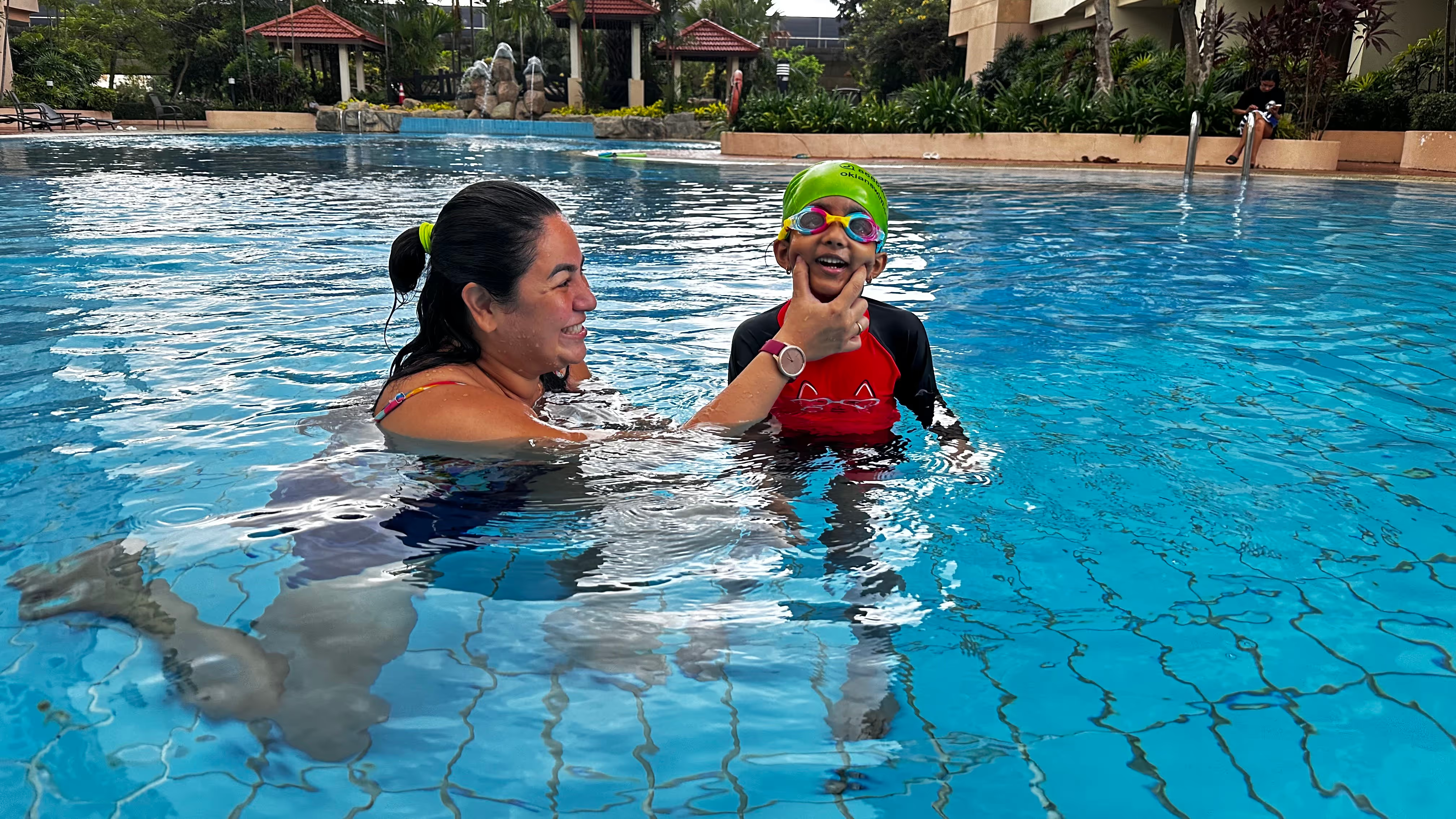


What to Expect From Your Child's First Swimming Lessons: A Week-by-Week Progress Guide
What this guide covers:
- The real signs your child is ready to start (not just their age)
- What actually happens in week 1 vs month 2
- The plateau every child hits — and why it's normal
- How to tell if progress is on track or genuinely stalled
- What parents can do at home to support progress between lessons
Parents ask us this constantly: "How will I know if my child is actually progressing, or just... going through the motions each week?"
It's a fair question. Swimming progress isn't always visible week to week — some weeks look like nothing changed, then suddenly your child does something they couldn't do a month ago. This guide walks through what real progress actually looks like, stage by stage, so you know what to expect and when to genuinely check in with your coach.
First, the Real Signs of Readiness
Before progress can happen, your child needs to actually be ready to start. Readiness isn't about age — it's about behaviour.
Your child is likely ready if they:
- Can follow simple instructions ("kick your feet," "blow bubbles")
- Are generally comfortable with new experiences, not just swimming specifically
- Can tolerate being away from you for the lesson duration (or are happy in a parent-accompanied format if younger)
- Don't have an extreme aversion to water on their face (some sensitivity is normal and workable; outright panic is a sign to go slower)
If your child is showing more fear than simple newness, it's worth reading our guide on overcoming fear of water before starting formal lessons — forcing a genuinely terrified child into lessons usually sets progress back rather than forward.
Week 1–2: Familiarisation, Not Technique
This is the stage parents most often misjudge. In the first couple of weeks, there should be almost no visible "swimming" happening — and that's completely normal.
What real progress looks like at this stage:
- Your child enters the water without being coaxed for 10 minutes
- They tolerate water on their face without immediately wiping it off in distress
- They start attempting to blow bubbles, even inconsistently
- They respond to simple instructions from the coach, not just from you
If your child is doing any of these things by week 2, that's genuine progress — even if it doesn't look like "swimming" yet. Comparing this stage to a peer who's already kicking independently is one of the most common (and unhelpful) things parents do.
Month 1–2: The Foundational Skills Stage
By this point, most children start showing clearer, more concrete skills:
- Kicking with some purpose while holding the wall or a float
- Attempting a front float with support, even briefly
- Blowing bubbles consistently rather than occasionally
- Showing less resistance to routine — the lesson starts to feel familiar rather than novel
This is also usually when parents start to see personality differences show up in the water. Some kids get bold quickly. Others need the full stretch of this period to feel truly comfortable. Both are normal — the pace difference isn't a sign anything is wrong.
The Plateau (And Why It's Not a Problem)
Almost every child hits a stretch — often somewhere between month 2 and month 4 — where progress seems to stall. They're not learning a new skill every week anymore. Parents sometimes worry at this point that something has gone wrong.
It usually hasn't. Plateaus happen because the current skill needs repetition to become automatic before the next one can be layered on top. A child who can float for 3 seconds needs that to become reliable and unconscious before they can add a kick on top of it without losing the float. That repetition phase doesn't always look exciting from the poolside — but it's doing real work.
When a plateau is genuinely worth flagging to your coach: if there's been no visible change at all — not even small ones — for 6–8 straight weeks, or if your child seems to be regressing (more reluctant than they were a month ago), that's worth a direct conversation with the coach rather than assuming it will resolve itself.
Month 3–6: Stroke Technique Begins
Once the foundational comfort and basic float/kick skills are solid, real stroke technique usually starts to develop — freestyle arm movements, coordinated breathing, more controlled kicking.
Progress at this stage is often more visible again, which is why parents sometimes feel like things "suddenly clicked." In reality, the plateau period before this is usually what made this stage possible — the foundation had to be automatic first.
How to Support Progress Between Lessons
Parents often ask what they can do outside of formal lesson time. A few things genuinely help:
- Casual pool time, not drilling. Free play in a pool (with appropriate supervision) reinforces comfort without the pressure of a formal lesson.
- Consistency over intensity. One lesson a week, every week, generally beats two lessons a week with long gaps in between.
- Avoid comparing progress out loud. Kids pick up on comparison faster than parents realise, and it tends to create anxiety rather than motivation.
- Celebrate the small, unglamorous wins. Blowing bubbles consistently is a real milestone, even if it doesn't look like much.
Frequently Asked Questions
How long does it take for a child to learn to swim?
This varies significantly, but many children move from complete beginner to basic independent swimming somewhere between 6 months and a year of consistent weekly lessons.
My child hasn't improved in weeks — should I be worried?
A short plateau (a few weeks) is normal and usually reflects a repetition phase. If there's been zero change for 6–8 weeks, or your child seems to be regressing, raise it directly with your coach.
Is it normal for my child to cry during early lessons?
Some initial hesitation is common, but ongoing distress each session is a sign to slow down, not push through. Consider our guide on overcoming fear of water if this continues.
Should I practice with my child outside of lessons?
Casual, low-pressure pool time can help reinforce comfort, but avoid trying to "drill" specific techniques yourself — that's best left to a coach who can correct form in real time.
How often should lessons happen for the best progress?
Weekly consistency generally produces better results than sporadic, intense bursts of lessons followed by long gaps.
Ready to Start (or Get Unstuck)?
Book a lesson with Swim Class Singapore — whether your child is just starting out or seems stuck at a plateau, our coaches will give you an honest read on where they actually stand.
👉 Book a lesson at swimclass.sg
Ready to find a suitable coach? Check swimming lesson availability for your preferred area and schedule.
Why Parents Love Swimming Lessons at Swim Class Singapore
Parents across Singapore trust Swim Class because we focus on both safety and fun.


Our lessons emphasize child-friendly teaching methods, small group attention, clear progression and skill development, and positive, encouraging instructors who help every child build confidence in the water.
Most importantly, we help kids build confidence in the water while enjoying every lesson.
Frequently Asked Questions About Kids Swimming Lessons
Everything parents usually ask before their little swimmer jumps in — from safety and schedules to choosing the right class.
Absolutely. Our baby swimming classes in Singapore are designed with safety as the top priority. Lessons are parent-assisted and led by certified swim instructors who specialize in helping babies and toddlers feel comfortable, confident, and happy in the water. Every session is gentle, structured, and designed to make those first splashes a positive experience.
It’s easier than you might think. Our kids swimming lessons in Singapore are organized by age and skill level, from baby swimming to beginner and intermediate programs. Simply share your child’s age and swimming experience, and we’ll recommend the class that helps them learn, progress, and enjoy the water at their own pace.
Yes, we offer swimming lessons at both condo pools and public swimming complexes across Singapore. This gives families the flexibility to choose the location that is most convenient for them.Lessons at public swimming pools are open to all students who want to join our swim classes.Lessons conducted at condo pools are available for residents of that condominium only, in accordance with condo management rules. If you live in a condo with a pool, we can arrange lessons right at your residence for added convenience.Just let us know your preferred location, and we’ll help match you with the best swimming lesson option in Singapore for your little swimmer.
Both options are available. We run swimming lessons at condo pools and public swimming complexes across Singapore, so you can choose the location that’s most convenient for your family. Once you tell us your preferred area, we’ll match you with a coach nearby.
Children can begin baby swimming lessons from around 6 months old. Starting early helps babies develop water confidence, basic safety awareness, and comfort in the pool — all while having fun and bonding with their parents.
Yes, we do. Our instructors provide SwimSafer preparation lessons in Singapore, helping children develop the swimming skills and water safety knowledge needed for the national SwimSafer programme. Lessons focus on both technique and confidence so kids feel ready for the next stage.
Still Curious? Let’s Chat!
Got a question about baby swimming, kids swimming lessons, or SwimSafer prep in Singapore? Our friendly team is happy to help you find the perfect class for your little swimmer.
Book your child's first lesson
Start your child’s swimming journey in Singapore with certified coaches who specialize in baby and kids swimming lessons. We’ll help your little swimmer build confidence, safety skills, and strong swimming technique from the very first splash.