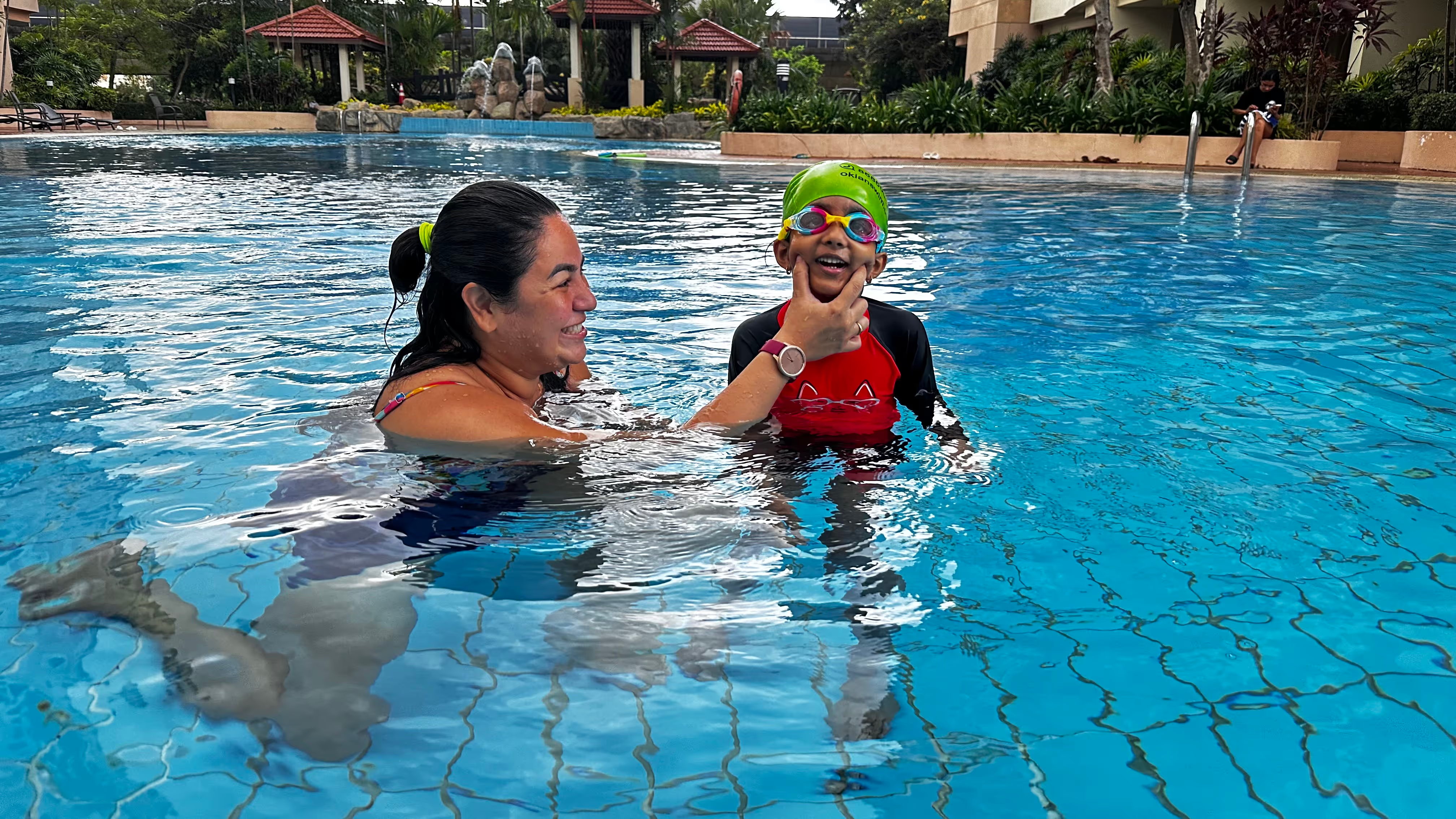


Overcoming Fear of Water: How Swim Class Singapore Helps You Go from Panic to Confidence
What you'll learn in this article:
- Why telling someone "just relax" is almost useless – and what to say instead
- The real root of water fear (it's not what most parents think)
- A simple, step-by-step progression that works for children AND adults – used daily at Swim Class Singapore
- Why small wins matter more than big breakthroughs
- What to expect during your first few lessons at swimclass.sg – and how long real progress takes
When most people think about learning to swim, they imagine the strokes – freestyle, breaststroke, butterfly. They picture strong arms pulling through clear water, rhythmic breathing, confident glides. But before any of that can happen, there's something more fundamental that no one likes to talk about: fear.
Fear of water is incredibly common. In fact, it's one of the most frequent reasons adults sign up for swimming lessons – not because they want to swim laps, but because they want to stop being afraid. And for children, fear often shows up as tears, clinging to the wall, or flat-out refusal to get in the pool.
At Swim Class Singapore (swimclass.sg) , we've helped hundreds of fearful swimmers – from toddlers to grandparents – become calm, confident water lovers. Here's what we've learned: overcoming fear of water isn't about bravery. It's about control. And control comes from a predictable, repeatable process – not from someone shouting "just relax!" from the pool deck.
Why "Just Relax" Is the Worst Advice You Can Get (or Give)
Let me tell you something that might surprise you. When a fearful swimmer hears "just relax," their body actually does the opposite. Their muscles tense. Their breathing gets shallower. Their heart rate climbs. Why? Because they want to relax – and they can't. And now they feel like they're failing at something as simple as relaxing.
Fear isn't a choice. It's a physiological response. Your brain perceives a threat (water over your face, not being able to touch the bottom, the sensation of sinking) and triggers your fight-or-flight response. That's not a character flaw. That's evolution.
So we don't teach "relaxation" at Swim Class Singapore. We teach familiarity, control, and small victories. Because you can't force someone to be calm. But you can give them tools that make calmness inevitable.
The Real Root of Water Fear: Loss of Control
Most fearful swimmers – whether they're six years old or sixty – share one common thread. It's not a past traumatic event (though that can certainly cause fear). It's usually much simpler: they don't know what will happen next.
Will water go up my nose? What if I can't breathe? What if my feet slip? What if I go under and can't come back up? These aren't irrational thoughts. They're legitimate questions from someone who hasn't yet learned how their body behaves in water.
The solution isn't to eliminate those questions. It's to answer them – one by one, in a safe, controlled environment, at the student's own pace. That's exactly what every instructor at swimclass.sg is trained to do.
Our Step-by-Step Progression for Fearful Swimmers (Used Daily at Swim Class Singapore)
This progression is designed for anyone – child or adult – who feels anxious about being in the water. It's the same process we've used with hundreds of fearful swimmers at Swim Class Singapore. And it works because it never asks anyone to do something they're not ready for.
Step 1: Feet on the Floor, Water at the Waist
We begin in the shallowest part of the pool – where the water reaches somewhere between the waist and chest when standing. The rule is simple: you can stand up anytime you want. Your head stays above water. Your feet stay on the ground. Nothing scary happens.
In this zone, we just exist. We splash water on our arms. We feel the temperature. We walk around. That's it. For some swimmers, this is a full lesson. For others, it's ten minutes. There's no rush.
Step 2: The Bounce Test
Once standing feels okay, we introduce a tiny, controlled challenge: a gentle bounce. Bend your knees slightly, then straighten. That's all. The water moves around you. Your feet leave the floor for a split second – then they're back.
This is where many fearful swimmers first notice something important: the water pushes back. When you bend your knees, the water supports you a little. Not completely – but a little. That sensation is the first seed of trust.
We repeat the bounce test until it feels boring. Boredom is the goal. Boredom means fear has left the building.
Step 3: The Wall Hold – Face in the Water (On Your Terms)
Now we move to the side of the pool. Swimmer holds the wall with both hands, arms extended, body at a comfortable distance. The water is still shallow enough to stand if needed.
Here's the key: the swimmer controls when their face goes in. We don't push. We don't count down from three. We say: "Whenever you're ready, you can put your chin in the water. Or just your lips. Or your whole face. You decide."
This transfer of control is everything. Fearful swimmers are used to feeling powerless. Giving them the power to choose changes the dynamic completely.
Most swimmers will try a small dip – chin first, then cheeks, then eventually their whole face. And when they come up, we don't cheer wildly. We just say, "Okay. How did that feel?" Normalizing the experience removes pressure.
Step 4: Blowing Bubbles (The Breathing Breakthrough)
Once a swimmer can put their face in the water willingly, we teach them to blow bubbles out of their nose and mouth. This sounds simple, but it's actually the most important skill in fear reduction.
Why? Because fear of water is almost always fear of not being able to breathe. When you know how to exhale underwater, you know you're never trapped. You can always empty your lungs and come up for air.
We start with mouth-only bubbles (like blowing out birthday candles, but into the water). Then nose bubbles (humming into the water works beautifully). Then both together.
We practice this for as long as it takes – sometimes multiple lessons. The milestone isn't pretty bubbles. The milestone is a swimmer who can put their face in and exhale without panic.
Step 5: Letting Go of the Wall – Supported Floating
Now we introduce floating – but with support. Swimmer holds the wall, takes a breath, puts their face in, and pushes off gently while a coach (or parent) supports them under the stomach or hips. They float for two seconds, then stand up.
Two seconds. That's it.
We gradually increase the float time – three seconds, five seconds, ten seconds. Always with support. Always with the swimmer knowing they can stand up whenever they want.
This is where something magical happens. Around the ten-second mark, most swimmers realize: I'm not sinking. I'm actually floating. That realization changes everything. Fear starts to feel silly. Confidence starts to feel real.
Step 6: Independent Gliding
Finally, the swimmer tries a small glide without physical support. Push off from the wall, arms extended, face in the water, legs straight – glide for a few seconds, then stand up.
The first independent glide is always short. It's also always a huge victory. Because now the swimmer has done something they genuinely believed they couldn't do. And that belief – that "I can do this" – is the foundation for every swimming skill that follows.
What Parents Should Expect from Swim Class Singapore
If you're watching your child go through this progression with us, here's what you need to know.
First, progress is not linear. Some days your child will float for ten seconds. The next day, they might cry at the edge of the pool. That's normal. Fear doesn't disappear in a straight line. It comes in waves. Your job is to stay calm and trust the process.
Second, don't rush. The biggest mistake parents make is pushing their child to the "next step" before they're ready. If your child is happy blowing bubbles, let them blow bubbles for three lessons. Boredom is safety. Safety is confidence. Confidence is speed – eventually.
Third, celebrate the small things. Did your child put their chin in the water? That's a win. Did they let go of the wall for one second? That's a win. Did they show up to the pool without crying? That's a win. Small victories stack.
For Adults: The Same Process, Just More Patience (and No Shame)
Adults who fear water often feel embarrassed. They think, "I'm a grown adult. I shouldn't be afraid of a pool." That shame makes everything harder.
Here's the truth: adult fear of water is often more intense than childhood fear. Adults have lived longer. They've had more time to build mental barriers. They've also lost the reckless bravery that children have.
But adults have one huge advantage: they understand why the progression works. An adult can intellectualize the process – "Okay, I'm just blowing bubbles. That's not dangerous." That understanding helps them push through discomfort.
If you're an adult overcoming water fear, here's our advice from Swim Class Singapore: go slower than you think you need to. Spend a whole lesson just standing in waist-deep water. Spend another lesson just holding the wall. There's no medal for finishing fast. There's only the goal of actually finishing.
How Long Does It Take with Swim Class Singapore?
This is the question everyone asks. And the honest answer is: it depends.
Some fearful swimmers move from standing to gliding in four lessons. Others take four months. Neither is right or wrong. The only wrong timeline is the one that pushes someone past their comfort zone and makes fear worse.
At swimclass.sg, we've seen the full spectrum. The common thread isn't speed – it's consistency. A swimmer who comes once a week for three months will almost always succeed. A swimmer who comes for two intense weeks then quits? Much less likely.
Fear doesn't respond to intensity. It responds to repetition and safety.
The Moment It Clicks
Every coach at Swim Class Singapore has a favorite moment. It's not when someone swims a perfect lap. It's when a fearful swimmer – the one who cried at the first lesson, who clung to the wall, who said "I can't" a hundred times – suddenly pushes off and glides on their own.
They come up from the water. Their eyes are wide. And they say, "Wait… I did it."
That's not just a swimming milestone. That's a life milestone. Because once you've faced a fear and won – even a small one – you carry that victory with you everywhere.
So if you're afraid of the water, or your child is, remember: you don't need to be brave. You just need to start. One step. One bubble. One glide at a time.
Frequently Asked Questions
How long does it take to overcome fear of water?
It varies significantly — some swimmers progress from standing to gliding in four lessons, others take four months. Consistency matters more than speed, and there's no single correct timeline.
Should I force my child to put their face in the water?
No. Letting the swimmer control when they're ready for each step — rather than counting down or pushing — is central to overcoming fear effectively and avoiding setbacks.
Is adult fear of water different from a child's fear?
Often more intense, since adults have had more time to build mental barriers and may feel embarrassed on top of the fear itself. The same step-by-step process works, just typically with more patience required.
What's the first step in overcoming water fear?
Simply standing in shallow water where you can always stand up — no swimming, no floating, just building basic comfort with being near and in the water.
Why doesn't telling someone to "just relax" help with water fear?
Fear is a physiological response, not a choice, so telling someone to relax often backfires — it can increase tension because they want to comply but physically can't on command.
If you're an adult specifically working through this, our guide on adult swimming lessons — it's never too late covers realistic timelines and what private coaching looks like at every stage.
Ready to Take the First Step with Swim Class Singapore?
You don't have to conquer fear alone. Our patient, proven approach has helped hundreds of swimmers in Singapore go from panic to confidence – at their own pace, with zero judgment.
👉 [Book Your Free Consultation at swimclass.sg]
Tell us about your fear. We'll tell you how we can help.
Or if you're not sure yet – that's fine too. Come watch a class for free. See how we work with fearful swimmers. No pressure. No obligation.
Your first victory is just one small bubble away.
Why Parents Love Swimming Lessons at Swim Class Singapore
Parents across Singapore trust Swim Class because we focus on both safety and fun.


Our lessons emphasize child-friendly teaching methods, small group attention, clear progression and skill development, and positive, encouraging instructors who help every child build confidence in the water.
Most importantly, we help kids build confidence in the water while enjoying every lesson.
Frequently Asked Questions About Kids Swimming Lessons
Everything parents usually ask before their little swimmer jumps in — from safety and schedules to choosing the right class.
Absolutely. Our baby swimming classes in Singapore are designed with safety as the top priority. Lessons are parent-assisted and led by certified swim instructors who specialize in helping babies and toddlers feel comfortable, confident, and happy in the water. Every session is gentle, structured, and designed to make those first splashes a positive experience.
It’s easier than you might think. Our kids swimming lessons in Singapore are organized by age and skill level, from baby swimming to beginner and intermediate programs. Simply share your child’s age and swimming experience, and we’ll recommend the class that helps them learn, progress, and enjoy the water at their own pace.
Yes, we offer swimming lessons at both condo pools and public swimming complexes across Singapore. This gives families the flexibility to choose the location that is most convenient for them.Lessons at public swimming pools are open to all students who want to join our swim classes.Lessons conducted at condo pools are available for residents of that condominium only, in accordance with condo management rules. If you live in a condo with a pool, we can arrange lessons right at your residence for added convenience.Just let us know your preferred location, and we’ll help match you with the best swimming lesson option in Singapore for your little swimmer.
Both options are available. We run swimming lessons at condo pools and public swimming complexes across Singapore, so you can choose the location that’s most convenient for your family. Once you tell us your preferred area, we’ll match you with a coach nearby.
Children can begin baby swimming lessons from around 6 months old. Starting early helps babies develop water confidence, basic safety awareness, and comfort in the pool — all while having fun and bonding with their parents.
Yes, we do. Our instructors provide SwimSafer preparation lessons in Singapore, helping children develop the swimming skills and water safety knowledge needed for the national SwimSafer programme. Lessons focus on both technique and confidence so kids feel ready for the next stage.
Still Curious? Let’s Chat!
Got a question about baby swimming, kids swimming lessons, or SwimSafer prep in Singapore? Our friendly team is happy to help you find the perfect class for your little swimmer.
Book your child's first lesson
Start your child’s swimming journey in Singapore with certified coaches who specialize in baby and kids swimming lessons. We’ll help your little swimmer build confidence, safety skills, and strong swimming technique from the very first splash.