
Snorkel for Diving vs Snorkel for Swimming Training: What's the Difference?
What you'll learn in this blog:
- The key difference between a dive snorkel (side-mounted) and a swim training snorkel (centre-mounted)
- Why a dive snorkel doesn't work well for serious lap swimming
- How a swim snorkel improves technique, body position, and lung capacity
- Why training snorkels work for all four strokes – freestyle, backstroke, breaststroke, butterfly
- Using snorkels for kids (what age and what to watch for)
- Safety tips for snorkel training in the pool
- How Swim Class Singapore uses snorkels in lessons
Walk into any Decathlon in Singapore and you'll see snorkels hanging on the wall. They look simple – a tube, a mouthpiece, a strap. How different can they be?
Very different, actually.
There's a common mistake I see at condo pools across Singapore: a parent buys a snorkel from the diving section, hands it to their child who's learning to swim, and expects it to work for lap training. The snorkel flops around, water splashes in, the child gets frustrated, and the snorkel ends up at the bottom of the swim bag.
The problem isn't the snorkel. It's using the wrong tool for the job.
If gear choices are confusing while your child learns, check swimming lesson availability and discuss their current stage with a coach. The comparison below will help you ask the right questions.
Let me explain the difference between a diving snorkel (side-mounted) and a swim training snorkel (centre-mounted). When you understand what each one is actually designed for, you'll know which one belongs in your child's swim bag – or your own.
First, What Does a Snorkel Actually Do?
Before we talk about differences, let's be clear about the basic function.
A snorkel is a breathing tube that allows you to keep your face in the water while still inhaling and exhaling. That's it. That's the whole point.
But how the tube attaches to your head, where it sits, and what it's designed to withstand – that's where dive snorkels and swim training snorkels part ways.
Diving Snorkels (Side-Mounted): Built for Floating, Not Swimming
The snorkel you see most often is the classic diving snorkel – the one snorkellers use to float face-down while watching fish in the ocean.
Design features:
- Mounts on the side of your head (usually left side)
- Curved tube that rises straight up
- Soft, flexible material
- Often has a splash guard or purge valve
- Designed for slow, gentle movement
What it's good for:
- Snorkelling in calm water
- Floating at the surface
- Occasional shallow dives
- Kids playing in the pool (not serious training)
Why it fails for swim training:
When you try to swim laps with a side-mounted dive snorkel, three things go wrong:
1. It wiggles and flops. A dive snorkel isn't designed to stay stable when you push off the wall or swim at speed. It vibrates, shifts, and can even hit you in the face.
2. It interferes with your arms. A side-mounted snorkel sits right where your arm should be pulling during freestyle. You have to modify your stroke to avoid hitting it – which defeats the purpose of training.
3. It doesn't handle flip turns well. Water rushes in when you roll over. Without a proper purge valve design, you'll swallow half the pool.
One swim coach put it simply: "Classic swimming with a diving snorkel is difficult – it doesn't stay in place and it vibrates while swimming."
So if your child is serious about learning to swim properly, or if you're an adult looking to improve your technique, a dive snorkel is not the answer.
Swim Training Snorkels (Centre-Mounted): Built for Lap Swimming

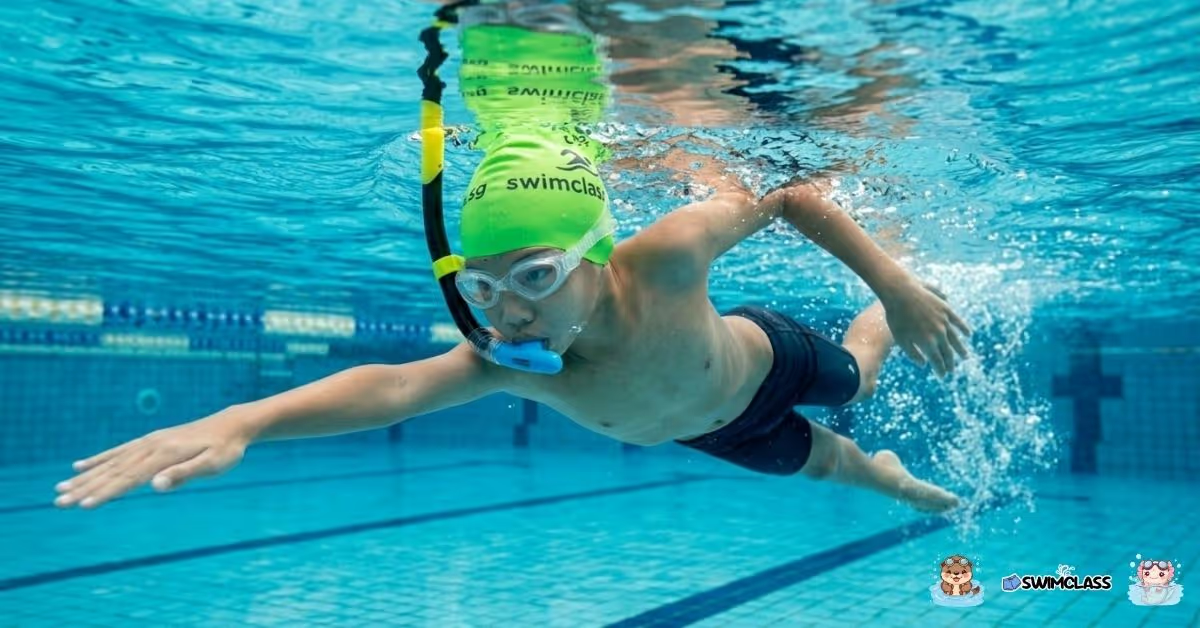
The centre-mounted swim snorkel (also called a front-mount or swimmer's snorkel) was developed specifically for pool training. It appeared on the scene in the late 1990s and quickly gained popularity among competitive and recreational swimmers. Swims across the world were changed.
Design features:
- Mounts in the centre of your forehead
- Curved tube that goes straight up, then bends back over your head
- Stiffer, more hydrodynamic shape (often triangular, not round)
- Sturdy head strap (tighter than goggles)
- Often has a one-way purge valve at the bottom
What it's good for:
- Lap swimming and pool training
- Technique drills (all four strokes)
- Building lung capacity and endurance
- Injury recovery (neck or shoulder issues)
Why it works for swim training:
1. It stays put. A proper swim snorkel is strapped securely to the centre of your forehead. It doesn't wiggle when you push off the wall or swim fast.
2. It stays out of your way. Because it's centre-mounted, your arms can pull freely without hitting the tube. This allows you to swim with natural, unmodified technique.
3. It handles turns. A good swim snorkel has a purge valve that makes clearing water quick and easy – even after flip turns.
One coach noted that the central snorkel is "preferred to the side snorkels used by divers as these can interfere with your arm movement and they don't cope so well with fast push-offs from walls."
Olympic swim coach Bob Bowman (who coached Michael Phelps) is a huge advocate of snorkel training. He worked with Phelps to design a centre-mount snorkel with a triangular, hydrodynamic shape and a purge valve that makes clearing water instant.
If you're serious about improving your swimming – or your child's swimming – a centre-mount training snorkel is the right tool.
Why Train with a Swim Snorkel? (The Benefits)
Once you have the right snorkel, what does it actually do for your swimming?
1. Removes the breathing distraction.
When you don't have to turn your head to breathe, you can focus 100% on your technique. No rushing to get air. No lifting your head (which sinks your hips). No favouring one side over the other.
One swimming coach explained: "Swimming with excellent technique is hard enough. But you know what makes it even harder? Breathing. ... Breathing—improperly—can cascade into more stroke dysfunction, causing a chain reaction of technical errors into your stroke."
Wearing a swim snorkel allows you to focus on:
- Entering your hand ahead of your shoulder
- Getting the right amount of shoulder and hip roll
- Keeping your hips high
- Building muscle memory with good technique
2. Improves stroke symmetry and balance.
Most swimmers have a dominant side. If you always breathe to the right, your stroke becomes unbalanced. Your right arm might pull stronger. Your body might rotate more on one side.
Training with a snorkel removes that head turn and helps you feel where your stroke has fallen out of symmetry. You can learn what it feels like to swim straight and balanced – and then take that feeling back to your normal swimming.
3. Builds lung capacity and breathing strength.
Breathing through a narrow tube is harder than breathing open air. It's a little like training at altitude – you're getting less oxygen with each breath.
This restriction forces your respiratory muscles to work harder. It strengthens the intercostals (the muscles between your ribs), builds your lung capacity, and improves your cardiovascular endurance.
Research shows that consistent training with a snorkel makes your body more efficient at working with the oxygen it takes in.
4. Reduces neck and shoulder strain.
If your child complains of neck pain after swimming, or if you're an adult with an old injury, a snorkel can be a game-changer.
By removing the need to turn your head to breathe, you can continue training without putting rotative strain on your neck. For swimmers who have arthritis or previous neck or spine injuries, a snorkel can be the difference between not swimming and being able to continue a healthy exercise routine.
5. Works for all four strokes.
Most people think snorkels are only for freestyle. Not true.
- Freestyle: Correct head position, improve hand awareness during entry and catch.
- Breaststroke: Eliminate breathing to accelerate recovery and focus on shooting arms forward.
- Backstroke: Practice body alignment without worrying about water splashing your face.
- Butterfly: Focus on the dolphin kick rhythm without interrupting your breathing pattern.
Can Kids Use a Swim Snorkel?
Yes – but with some important considerations.
What age is appropriate?
Children as young as 6–10 can start using a swim snorkel designed for their size. There are now snorkels specifically designed for children ages 6–10 that give them confidence and help them develop better skills.
Benefits for kids:
- Removes the fear of not getting air – children can focus on technique without panic
- Helps them learn to keep their head down (hips stay higher)
- Builds confidence in the water faster
- Makes kicking drills less frustrating
Important safety notes for kids:
- Always supervise – A snorkel is a training tool, not a safety device. Never leave a child unattended while using a snorkel.
- Start with short sessions – 5–10 minutes of snorkel work is plenty for young beginners.
- Use a nose clip if needed – Many children instinctively breathe out through their nose. A nose clip helps them switch to mouth-only breathing with the snorkel.
- Choose the right size – Children's snorkels have smaller mouthpieces and shorter tubes. A standard adult snorkel will be uncomfortable and may cause jaw fatigue.
At Swim Class Singapore, we introduce centre-mount snorkels to children who are already comfortable putting their face in the water and blowing bubbles. We never start with a snorkel – it comes after basic water confidence is established.
Snorkels for Adult Swimmers (Absolute Beginners to Advanced)
Adults benefit enormously from snorkel training – maybe even more than kids.
For absolute beginners: A snorkel removes the anxiety of "when do I breathe?" Many adults learning to swim feel panicked about getting air. A snorkel lets them relax, keep their face in the water, and focus on floating and kicking without fear.
For intermediate swimmers: A snorkel helps you fix your body position. Most adult swimmers lift their head when breathing, which sinks their hips. A snorkel lets you practice keeping your head perfectly still – so you can feel what a high, efficient body position actually feels like.
For advanced swimmers: A snorkel builds lung capacity and endurance. You can swim longer sets without stopping for air. You can add a restrictor to the snorkel to make breathing even harder – forcing your lungs to adapt like training at altitude.
One coach noted that some research shows an improved aerobic capacity from swimmers who use a centre-mounted snorkel, because the body adapts to handle the CO2 that is found in the same tube the oxygen enters through.
How to Choose the Right Snorkel
If you're buying a snorkel for swim training, here's what to look for:
For swim training (centre-mounted):
- Look for "swimmer's snorkel" or "centre-mount snorkel"
- Brands: Finis, MP (Michael Phelps), Speedo, TYR, Kiefer
- Triangular or hydrodynamic shape (not round)
- Sturdy head strap that sits on your forehead
- Purge valve at the bottom for clearing water
- If buying for a child (6–10 years), look for a junior size
For diving/snorkelling (side-mounted):
- Fine for casual pool play or beach snorkelling
- Not recommended for lap swimming or technique training
Where to buy in Singapore:
- Decathlon (basic options, affordable)
- Speciality swim shops (Finis, MP, Speedo)
- Online (Lazada, Shopee)
A basic centre-mount swim snorkel costs $25–$50 – a very affordable investment in better swimming technique.
Safety Tips for Snorkel Training
A snorkel is a training tool, not a safety device. Follow these rules:
1. Never use a snorkel as a flotation device. It will not keep anyone afloat. Constant adult supervision is required.
2. Always clear water before inhaling. Get into the habit of blowing a sharp puff of air as soon as you put your face in – this clears any water from the tube.
3. Use a nose clip if water goes up your nose. Many swimmers find that a nose clip makes snorkel training much more comfortable.
4. Start slowly. Begin by floating with the snorkel, then add gentle kicking, then full swimming. Don't try flip turns on day one.
5. Never hyperventilate before swimming. Rapid deep breathing before putting your face in can lower CO2 levels and increase the risk of blackout. Breathe normally.
6. If water enters the snorkel, don't panic. Blow it out sharply. It takes practice.
7. Supervise children at all times. A snorkel gives a false sense of security. Parents must stay within arm's reach.
At Swim Class Singapore, we introduce snorkels gradually. We teach proper breathing technique first, then add the snorkel as a tool for advanced drills and longer sets.
Sample Snorkel Drills to Try
Here are simple drills you can try with a centre-mount swim snorkel:
Drill 1: Head-neutral kicking
- Hold a kickboard (or just streamline)
- Wear the snorkel and keep your head perfectly still
- Kick 50 metres focusing on keeping your hips high
Drill 2: Catch and pull focus
- Swim freestyle with the snorkel
- Slow your stroke way down
- Feel each phase: hand entry, catch, pull, finish, recovery
Drill 3: Alternate with and without snorkel
- Swim 25 metres with snorkel (focus on technique)
- Swim 25 metres without snorkel (try to keep the same body position)
- Repeat 4–6 times
Drill 4: Bilateral breathing practice
- Swim with snorkel to feel symmetrical rotation
- Remove snorkel and practice breathing to both sides
- The snorkel helps you learn what "balanced" feels like
A snorkel works well alongside other technique tools — see our guides on kicking boards and swim fins for the rest of a well-rounded training kit.
Frequently Asked Questions
What's the difference between a diving snorkel and a swim training snorkel?
A diving snorkel mounts on the side of the head and is designed for calm floating, while a swim training snorkel mounts at the centre of the forehead and is built to stay stable during lap swimming and flip turns.
Can a diving snorkel be used for swim training?
Not effectively — it tends to wobble, interfere with arm movement, and doesn't handle flip turns well, making it unsuitable for serious technique work.
What age can kids start using a swim training snorkel?
Children as young as 6-10 can use a properly sized junior swim snorkel, but only once they're already comfortable putting their face in the water and blowing bubbles.
Is a swim snorkel a safety device?
No — it's a training tool only and does not function as a flotation or safety device. Constant adult supervision is still required whenever a snorkel is used.
How much does a swim training snorkel cost in Singapore?
A basic centre-mount swim snorkel typically costs between $25 and $50, available at sports retailers like Decathlon or online.
The Bottom Line
A diving snorkel and a swim training snorkel look similar – but they are completely different tools.
- Diving snorkels (side-mounted) are for floating and casual snorkelling. They wobble, interfere with your arms, and don't work well for lap swimming.
- Swim training snorkels (centre-mounted) are designed for pool training. They stay stable, stay out of your way, and help you focus entirely on technique.
Training with a centre-mount snorkel improves your stroke symmetry, body position, lung capacity, and breathing strength – for all four strokes. It's an affordable tool that works for both kids (ages 6+) and adults, from absolute beginners to advanced swimmers.
At Swim Class Singapore, we use centre-mount snorkels in our lessons – once basic water confidence is established. We show swimmers how to use them safely and effectively, as part of a complete training programme.
Ready to Add a Snorkel to Your Training?
Book a lesson at Swim Class Singapore – we'll show you how to use a centre-mount snorkel to improve technique, build lung strength, and swim faster.
👉 Book a lesson at swimclass.sg
Ready to find a suitable coach? Check swimming lesson availability for your preferred area and schedule.
Why Parents Love Swimming Lessons at Swim Class Singapore
Parents across Singapore trust Swim Class because we focus on both safety and fun.


Our lessons emphasize child-friendly teaching methods, small group attention, clear progression and skill development, and positive, encouraging instructors who help every child build confidence in the water.
Most importantly, we help kids build confidence in the water while enjoying every lesson.
Frequently Asked Questions About Kids Swimming Lessons
Everything parents usually ask before their little swimmer jumps in — from safety and schedules to choosing the right class.
Absolutely. Our baby swimming classes in Singapore are designed with safety as the top priority. Lessons are parent-assisted and led by certified swim instructors who specialize in helping babies and toddlers feel comfortable, confident, and happy in the water. Every session is gentle, structured, and designed to make those first splashes a positive experience.
It’s easier than you might think. Our kids swimming lessons in Singapore are organized by age and skill level, from baby swimming to beginner and intermediate programs. Simply share your child’s age and swimming experience, and we’ll recommend the class that helps them learn, progress, and enjoy the water at their own pace.
Yes, we offer swimming lessons at both condo pools and public swimming complexes across Singapore. This gives families the flexibility to choose the location that is most convenient for them.Lessons at public swimming pools are open to all students who want to join our swim classes.Lessons conducted at condo pools are available for residents of that condominium only, in accordance with condo management rules. If you live in a condo with a pool, we can arrange lessons right at your residence for added convenience.Just let us know your preferred location, and we’ll help match you with the best swimming lesson option in Singapore for your little swimmer.
Both options are available. We run swimming lessons at condo pools and public swimming complexes across Singapore, so you can choose the location that’s most convenient for your family. Once you tell us your preferred area, we’ll match you with a coach nearby.
Children can begin baby swimming lessons from around 6 months old. Starting early helps babies develop water confidence, basic safety awareness, and comfort in the pool — all while having fun and bonding with their parents.
Yes, we do. Our instructors provide SwimSafer preparation lessons in Singapore, helping children develop the swimming skills and water safety knowledge needed for the national SwimSafer programme. Lessons focus on both technique and confidence so kids feel ready for the next stage.
Still Curious? Let’s Chat!
Got a question about baby swimming, kids swimming lessons, or SwimSafer prep in Singapore? Our friendly team is happy to help you find the perfect class for your little swimmer.
Book your child's first lesson
Start your child’s swimming journey in Singapore with certified coaches who specialize in baby and kids swimming lessons. We’ll help your little swimmer build confidence, safety skills, and strong swimming technique from the very first splash.