
How Important Is Stretching for Swimmers? (And How To get it Right?)
What you'll learn in this blog:
- Why stretching is not just "warm-up" – it's a performance tool
- The difference between dynamic stretching (before swimming) and static stretching (after swimming)
- How proper flexibility prevents shoulder injuries, back pain, and tight hips
- Why most young swimmers skip stretching – and how to change that habit
- A simple 5-minute pre-swim routine and a 5-minute post-swim cool-down
- Age-appropriate stretching for kids vs adults
- How Swim Class Singapore encourages flexibility as part of every lesson
Every week, I watch young swimmers arrive at the pool.
They drop their bags. They pull on their goggles. And they jump straight into the water.
No arm swings. No leg swings. No reaching for their toes. Nothing.
The parent watches from the pool deck, thinking: "Good, they're keen to start."
Here's the problem: skipping stretching is like driving a car without warming up the engine. You might get moving, but you're putting unnecessary strain on every part of the system.
At Swim Class Singapore, we see the difference between swimmers who stretch and those who don't. The ones who stretch properly:
- Get injured less often (especially shoulders and lower back)
- Move more smoothly through the water
- Recover faster after hard sets
- Improve their technique faster
Let me explain why stretching matters, when to do it, and how to build a simple routine that works for swimmers of all ages.
First, What Does Stretching Actually Do for Swimmers?
Most people think stretching is just about touching your toes. It's not.
For swimmers, stretching does three critical things:
1. Increases range of motion in your joints
Swimming demands flexibility. A good freestyle catch requires your shoulder to rotate fully. A proper breaststroke kick needs open hips. A powerful butterfly undulation needs a flexible spine.
Without enough range of motion, your child will compensate with bad technique – dropping an elbow, bending a knee too much, arching the lower back. Those compensations lead to inefficiency and, eventually, injury.
2. Reduces muscle tightness and soreness
Swimming is repetitive. Thousands of strokes tighten the chest, shoulders, and hip flexors. Tight muscles pull on joints, creating poor posture in and out of the water.
Stretching after swimming helps those tight muscles return to their normal length. That means less stiffness the next day and less cumulative tightness over weeks and months.
3. Prepares the nervous system for movement
Dynamic stretching (moving while stretching) wakes up the nerves that control your muscles. It improves coordination, reaction time, and body awareness – all essential for good swimming.
One study on competitive swimmers found that a regular flexibility program improved stroke length and reduced shoulder pain. Another study showed that swimmers with tighter shoulders had slower times and more injuries.
Stretching isn't optional. It's part of training.
The Big Mistake: Static Stretching Before Swimming
Here's where most parents get it wrong.
They see their child touching their toes or doing a butterfly stretch before getting in the water. And they think: "Good, they're stretching."
But research over the past decade has shown that long, static stretching (holding a stretch for 30+ seconds) before exercise can actually reduce power and speed.
Why? Because static stretching temporarily relaxes the muscle. A relaxed muscle can't generate as much force. For a sport like swimming, where every start, turn, and pull requires explosive power, that's a problem.
So what should you do instead?
Dynamic stretching before swimming. Move the joints through their full range of motion without holding still. This warms up the muscles, increases blood flow, and prepares the nervous system – without reducing power.
Static stretching after swimming. Once the workout is done, static stretching helps lengthen tight muscles, improve long-term flexibility, and speed up recovery.
If your child is learning to swim, check lesson availability for guided practice in the water. You can use the simple stretching routine below around those sessions.
Think of it this way:
- Before swimming: Move your body (dynamic)
- After swimming: Hold your stretches (static)
Dynamic Stretching Routine (Before Swimming – 5 Minutes)
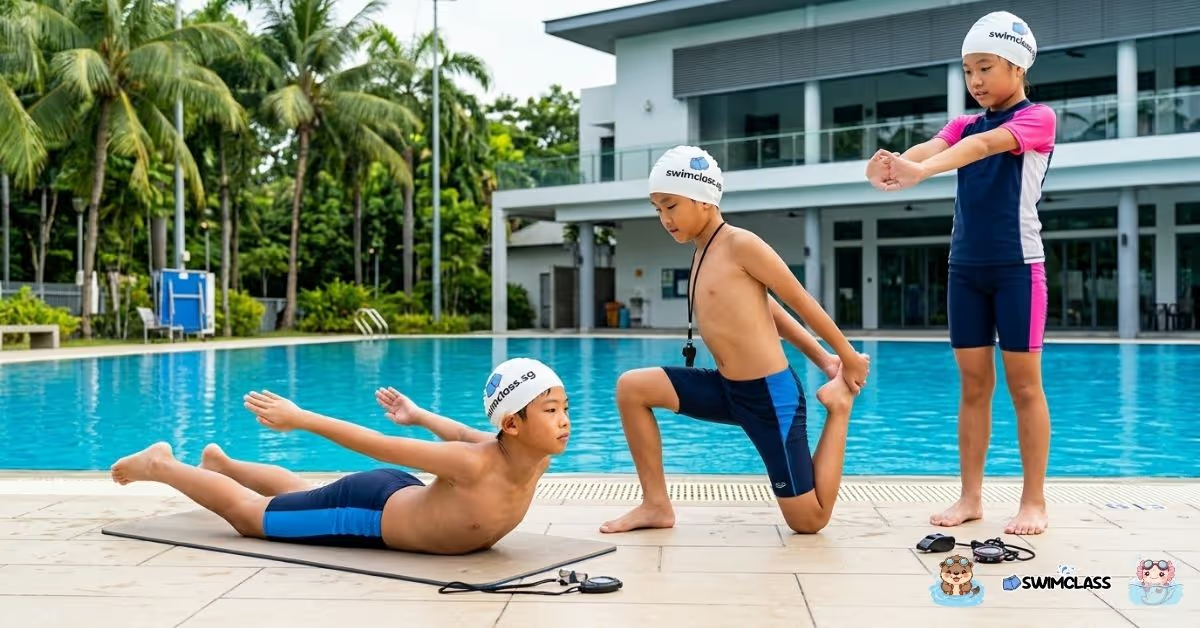
Here's a simple pre-swim routine any swimmer can do on the pool deck. No equipment needed. Perform each movement 10–15 times or for 20–30 seconds. Do not hold still.
Arm circles (forward and backward)
- Start small, then make bigger circles
- Warms up the shoulder joint for all strokes
Torso twists
- Stand with feet shoulder-width apart, arms out to the sides
- Twist left and right, letting your arms swing
- Prepares the spine for body rotation in freestyle and backstroke
Leg swings (forward and backward)
- Hold onto a wall or chair
- Swing one leg forward and backward like a pendulum
- Loosens the hip joint for kicking
Leg swings (side to side)
- Hold onto a wall
- Swing one leg across your body and out to the side
- Opens the hips for breaststroke and flutter kick
Arm cross-body swings
- Swing one arm across your chest, then out to the side
- Stretches the back of the shoulder and upper back
Jumping jacks (30 seconds)
- Gets the heart rate up and blood flowing
Complete this routine in 3–5 minutes. Then get in the water and swim easy for another 5 minutes before hard kicking or pulling.
Static Stretching Routine (After Swimming – 5–10 Minutes)
After your child finishes their lesson or practice, spend 5–10 minutes holding stretches. Hold each stretch for 20–30 seconds. Do not bounce. Breathe normally.
Triceps stretch (overhead)
- Reach one arm up and bend the elbow, hand touching the opposite shoulder blade
- Gently pull the elbow with the other hand
- Releases tightness in the pulling muscles
Chest stretch (doorframe or wall)
- Place a hand on a wall at shoulder height
- Turn your body away until you feel a stretch across the chest
- Swimmers have tight chests – this is essential
Shoulder cross-body stretch
- Bring one arm across your chest
- Use the other arm to pull it gently toward you
- Stretches the rear deltoid and rotator cuff
Lat stretch (overhead reach)
- Reach both arms overhead, clasp your hands
- Lean to one side, then the other
- Opens the sides of the back (important for freestyle reach)
Quadriceps stretch (standing)
- Stand on one leg, pull the other foot toward your glutes
- Keep knees together
- Stretches the front of the thigh (used heavily in kicking)
Hamstring stretch
- Sit on the ground, one leg straight, one leg bent
- Reach toward the straight foot
- Loosens the back of the leg (helps with body line)
Seated forward fold
- Sit with both legs straight, reach toward your toes
- Stretches the entire back of the legs and lower back
Butterfly stretch
- Sit with the soles of your feet together, knees out
- Gently press your knees toward the ground
- Opens the hips for breaststroke
Hold each stretch without bouncing. If a stretch feels painful (not just tight), ease off.
Why Young Swimmers Resist Stretching – And How to Fix It
I hear the same excuses every week:
"Stretching is boring."
"I don't have time."
"I'll do it at home." (They never do.)
Here's how to build the habit:
Make it part of the routine, not an add-on. Stretching happens immediately after every swim – no exceptions. Just like showering after practice. Non-negotiable.
Do it together. If you're at the pool, stretch with your child. Kids copy adults. Show them it matters.
Use a timer. 30 seconds per stretch feels longer than it is. Use a phone or watch timer. When the beep sounds, move to the next stretch.
Turn it into a challenge. "Can you reach further than yesterday?" "Let's see who can hold the butterfly stretch the longest (with good form)."
Explain why. Kids respond to "this will make you faster" more than "it's good for you."
At Swim Class Singapore, we build 5 minutes of stretching into every lesson – at the beginning and the end. We don't skip it. Neither should you.
Age-Appropriate Stretching (Kids vs Adults)
The same stretches work for all ages, but the focus changes.
Swimmers Aged 6–10
At this age, the goal is fun and habit formation, not perfect form.
- Keep stretching sessions short (5 minutes total)
- Use games: "reach for the sky," "touch your toes," "butterfly wings"
- Focus on major muscle groups (shoulders, hamstrings, hips)
- Never force a stretch – gentle encouragement only
Swimmers Aged 11–14
This is when flexibility becomes critical. Growth spurts tighten muscles quickly.
- Emphasise the chest, shoulders, and hip flexors (tight from sitting at school)
- Introduce both dynamic (before) and static (after) routines
- Hold stretches for 20–30 seconds
- Watch for signs of overuse injuries – tightness is often the first warning
Swimmers Aged 15+ (Including Adults)
Adults and older teens need longer, more consistent stretching.
- Spend 10–15 minutes on static stretching after every swim
- Pay extra attention to shoulders (rotator cuff) and lower back
- Use foam rolling or massage balls for tight spots
- If you work at a desk, stretch your chest and hips daily – not just on swim days
Adults often have tighter shoulders and hips from years of sitting. Be patient. Consistency matters more than intensity.
Signs Your Child Needs More Stretching (And What to Watch For)
Stretching isn't just about performance. It's about preventing problems before they start.
Watch for these red flags:
- Complaining of "tight shoulders" or "sore back" after every swim
- Struggling to reach for the wall during backstroke starts
- A noticeably rounded upper back posture (from tight chest, weak back)
- Difficulty sitting cross-legged or with straight legs
- Complaints of heel or arch pain (tight calves)
If you see these, increase stretching – and talk to your coach or a physiotherapist.
Stretching for Injury Prevention (The Research)
Multiple studies have linked poor flexibility to higher injury rates in swimmers.
The most common swimming injuries are:
- Shoulder impingement (swimmer's shoulder) – caused by tight chest muscles and weak rotator cuffs. Stretching the chest and strengthening the back muscles helps.
- Lower back pain – especially in butterfly and breaststroke. Tight hip flexors pull on the lower back. Stretching the hips and core work both help.
- Breaststroker's knee – caused by tight hip adductors and poor technique. The butterfly stretch (soles of feet together) helps maintain hip mobility.
A study of competitive swimmers found that those who performed a consistent flexibility program had 40% fewer overuse injuries than those who stretched irregularly.
Stretching won't prevent all injuries. But it's one of the simplest, most effective tools you have.
A Note on Foam Rolling (For Older Swimmers and Adults)
Foam rolling (self-myofascial release) is like deep stretching for tight muscles. It's especially useful for:
- Latissimus dorsi (the large back muscle used in pulling)
- Calves and hamstrings (tight from kicking)
- Quadriceps (tight from flutter kick)
Use a foam roller after static stretching, or on rest days. Roll slowly over each muscle group for 30–60 seconds. Avoid rolling directly on joints or bones.
For young children (under 12), foam rolling is usually unnecessary. Bodyweight stretching is enough.
How Swim Class Singapore Incorporates Stretching
At Swim Class Singapore (swimclass.sg) , stretching is not an afterthought. It's built into every lesson.
- Dynamic warm-up on deck – Before every lesson, we lead swimmers through arm swings, leg swings, and torso twists.
- Post-swim cool-down – After the lesson, we guide swimmers through static stretches (chest, shoulders, hamstrings, hips).
- Education for parents – We explain why each stretch matters, so you can reinforce the habit at home.
- Age-appropriate routines – We don't expect a 6‑year‑old to hold a stretch for 30 seconds. We adapt.
Our affordable private lessons ($80) and group lessons (from $32.50) give your child consistent coaching – including proper warm‑up and cool‑down.
If your child isn't stretching before and after swimming, they're not getting the full benefit of their time in the pool. Start today. Five minutes before. Five minutes after. That's it.
The Bottom Line
Stretching is not optional for swimmers. It's as important as the strokes themselves.
- Before swimming: Dynamic stretching (arm swings, leg swings, torso twists) – 5 minutes
- After swimming: Static stretching (hold 20–30 seconds) – 5–10 minutes
- Focus on: Shoulders, chest, hamstrings, hips, lower back
- For kids: Make it fun, keep it short, build the habit
- For adults: Be consistent – especially if you sit at a desk
A swimmer who stretches properly will:
- Get injured less often
- Move more efficiently through the water
- Improve technique faster
- Recover better between sessions
Skip stretching, and you're leaving speed and safety on the table. Combined with foam rolling and dry-land strength work, a proper stretching routine rounds out a swimmer's full recovery picture.
So tonight, before your child's next lesson or practice, show them this article. Do the dynamic warm‑up together. Then after swimming, do the cool‑down together.
Watch how much better they feel – and how much faster they swim.
Frequently Asked Questions
Should swimmers stretch before or after swimming?
Both, but differently. Dynamic stretching (moving through a range of motion) before swimming warms up the body without reducing power. Static stretching (holding a position) after swimming helps lengthen tight muscles and aids recovery.
What's the difference between dynamic and static stretching?
Dynamic stretching involves continuous movement (arm circles, leg swings) and is best before exercise. Static stretching involves holding a position for 20-30 seconds and is best after exercise, since it can temporarily reduce muscle power if done beforehand.
How long should a pre-swim stretch routine take?
About 5 minutes is enough for a solid dynamic warm-up covering the shoulders, hips, and spine before getting in the water.
Can stretching prevent swimmer's shoulder?
It helps significantly. Tight chest muscles and weak rotator cuffs are major contributors to swimmer's shoulder, and consistent stretching combined with strengthening reduces that risk considerably.
Is stretching necessary for young kids?
Yes, but keep it short, playful, and non-forced — around 5 minutes total, framed as a game rather than a strict routine, works best for children aged 6-10.
Ready to Build Better Habits – In and Out of the Pool?
Book an affordable swimming lesson at Swim Class Singapore – we'll coach your child with proper warm‑up, technique, and cool‑down every session.
👉 Book a lesson at swimclass.sg
Ready to find a suitable coach? Check swimming lesson availability for your preferred area and schedule.
Why Parents Love Swimming Lessons at Swim Class Singapore
Parents across Singapore trust Swim Class because we focus on both safety and fun.


Our lessons emphasize child-friendly teaching methods, small group attention, clear progression and skill development, and positive, encouraging instructors who help every child build confidence in the water.
Most importantly, we help kids build confidence in the water while enjoying every lesson.
Frequently Asked Questions About Kids Swimming Lessons
Everything parents usually ask before their little swimmer jumps in — from safety and schedules to choosing the right class.
Absolutely. Our baby swimming classes in Singapore are designed with safety as the top priority. Lessons are parent-assisted and led by certified swim instructors who specialize in helping babies and toddlers feel comfortable, confident, and happy in the water. Every session is gentle, structured, and designed to make those first splashes a positive experience.
It’s easier than you might think. Our kids swimming lessons in Singapore are organized by age and skill level, from baby swimming to beginner and intermediate programs. Simply share your child’s age and swimming experience, and we’ll recommend the class that helps them learn, progress, and enjoy the water at their own pace.
Yes, we offer swimming lessons at both condo pools and public swimming complexes across Singapore. This gives families the flexibility to choose the location that is most convenient for them.Lessons at public swimming pools are open to all students who want to join our swim classes.Lessons conducted at condo pools are available for residents of that condominium only, in accordance with condo management rules. If you live in a condo with a pool, we can arrange lessons right at your residence for added convenience.Just let us know your preferred location, and we’ll help match you with the best swimming lesson option in Singapore for your little swimmer.
Both options are available. We run swimming lessons at condo pools and public swimming complexes across Singapore, so you can choose the location that’s most convenient for your family. Once you tell us your preferred area, we’ll match you with a coach nearby.
Children can begin baby swimming lessons from around 6 months old. Starting early helps babies develop water confidence, basic safety awareness, and comfort in the pool — all while having fun and bonding with their parents.
Yes, we do. Our instructors provide SwimSafer preparation lessons in Singapore, helping children develop the swimming skills and water safety knowledge needed for the national SwimSafer programme. Lessons focus on both technique and confidence so kids feel ready for the next stage.
Still Curious? Let’s Chat!
Got a question about baby swimming, kids swimming lessons, or SwimSafer prep in Singapore? Our friendly team is happy to help you find the perfect class for your little swimmer.
Book your child's first lesson
Start your child’s swimming journey in Singapore with certified coaches who specialize in baby and kids swimming lessons. We’ll help your little swimmer build confidence, safety skills, and strong swimming technique from the very first splash.