
Children Swimming Safety Tips in Singapore (Islandwide): Keep Your Kids Safe & Confident
What this guide covers:
- The biggest hidden dangers around pools (not what you think)
- How to prevent panic — the real cause of accidents
- Simple safety habits every child must learn early
- What parents often do wrong (and how to fix it)
- Why confidence is the bridge between fear and safety
There's a dangerous assumption many parents make:
"My child is near the pool, but I'm watching — so it's safe."
That confidence is exactly where problems start.
Because when it comes to water, accidents don't come with warnings. They happen fast. Quietly. And often when everything looks under control.
In Singapore, where condo pools are part of everyday life — from East Coast to Jurong, from Woodlands to Tiong Bahru — swimming safety isn't optional. It's a basic life skill for families living islandwide.
Let's talk about what actually keeps your child safe.
The Real Danger: Panic, Not Water
Most people think danger comes from deep water.
Wrong.
The real problem is panic.
A child who panics:
- Forgets how to move
- Stops breathing properly
- Loses control within seconds
Even in shallow water. Even after months of lessons. Panic overrides everything they've learned.
That's why real safety isn't about teaching strokes first. It's about teaching a child how to:
- Stay calm when water touches their face
- Control their breathing (exhale underwater, inhale above)
- Float and recover to the edge
Because a calm child can think. A panicking child cannot.
Start With Comfort, Not Technique
Here's where a lot of parents get it wrong.
They want progress:
- "Kick properly"
- "Use your arms"
- "Swim to me"
But if your child is still uncomfortable putting their face in water, you're building on a weak foundation.
Start here instead:
- Splashing and playing
- Blowing bubbles on the surface
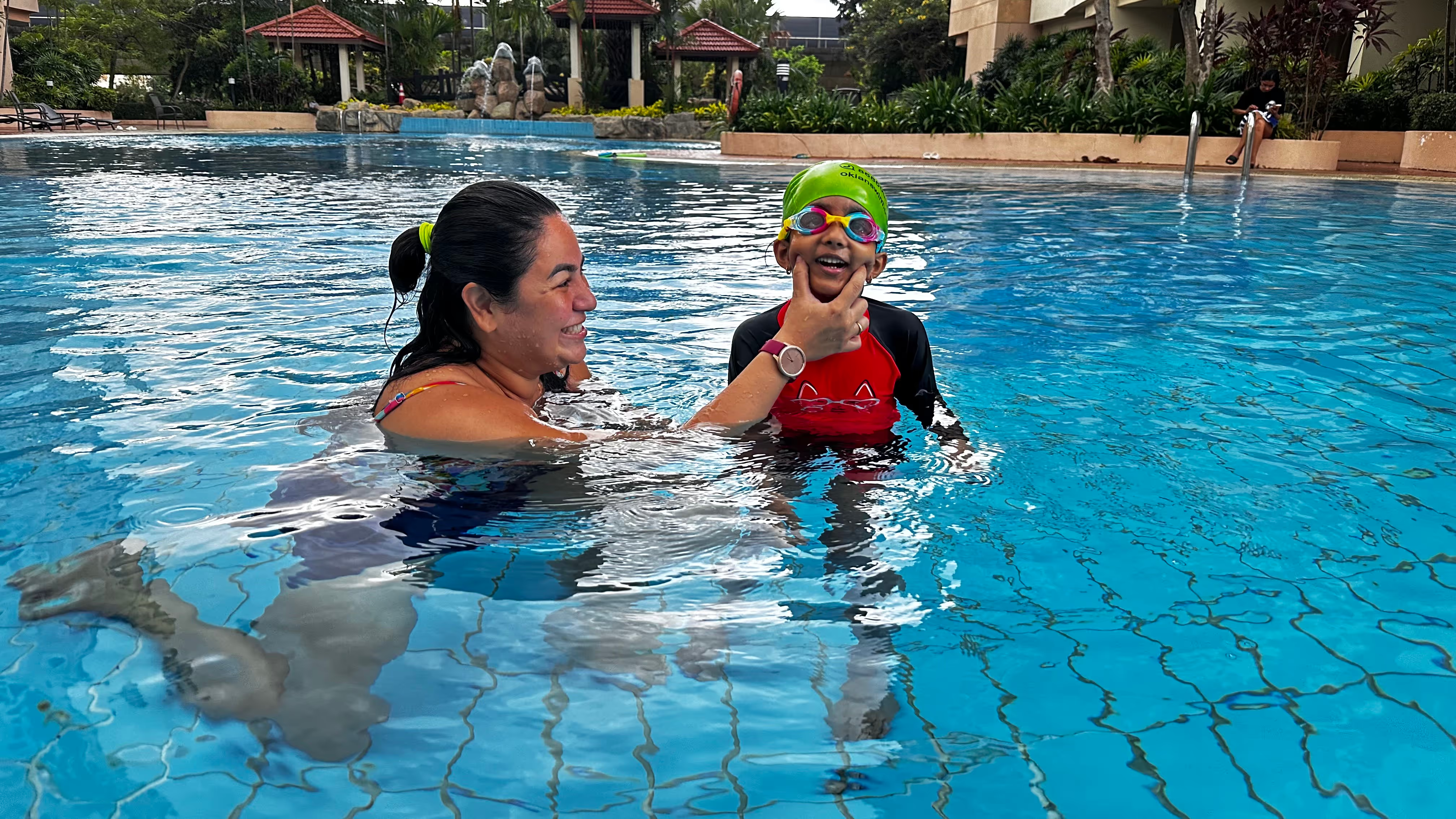
- Getting used to water on the face (chin, then cheeks, then whole face)
- Holding the wall and moving slowly
It looks simple — almost too simple. But this is where confidence is built. Skip this, and you'll deal with fear and resistance for years.
Constant Supervision Means Undivided Attention
Let's be blunt.
"Watching your child" doesn't count if you are:
- On your phone
- Talking to someone else for more than a few seconds
- Half-distracted by food or a book
Supervision means:
- Eyes on the child at all times
- Within arm's reach (especially for kids under 5 or weak swimmers)
- Ready to react instantly
Here's a fact most parents don't know: drowning is silent. There's no shouting. No dramatic splashing like in movies. A child struggling to breathe cannot call for help. If you're distracted, you'll miss it.
Teach These 3 Survival Skills Early
Forget perfect technique. If your child learns just these three things, their safety level jumps massively.
1. Floating on the back
This is the reset button. When tired, scared, or disoriented, floating on the back keeps them above water and breathing. It buys time. It calms panic. It works in any depth.
2. Reaching the pool edge
They don't need to swim far. They just need to know: "Where is the wall? Can I get there?" Practice pushing off the bottom, turning toward the edge, and holding on.
3. Basic breath control
Simple habit:
- Inhale outside the water
- Exhale into the water (nose or mouth)
This alone reduces panic. A child who can blow bubbles underwater knows they won't suffocate.
Safety Rules That Actually Matter
You don't need 20 rules. You need the right ones.
- No running near the pool (wet tiles are slippery)
- Always enter the water slowly (no jumping unless an adult says it's safe)
- Never swim alone (even in a condo pool)
- Listen to the coach or supervising adult immediately
Keep it simple. Repeat them often. Children remember what's consistent, not what's complicated.
What Most Parents Get Wrong
Let's call it out directly.
❌ Overconfidence
"My child took a few lessons — they're fine."
No. Skills fade. Confidence can disappear under stress or in unfamiliar water. Never assume.
❌ Forcing progress
Throwing a child into water to "make them learn faster"? That's not training. That's damage. It creates trauma that takes years to undo.
❌ Relying on floatation devices
Water wings, floaties, life jackets — they create a false sense of security. Take them off, and many kids panic instantly because they never learned their own buoyancy. Use floatation devices only under direct supervision, and phase them out early.
❌ Thinking lessons = safety
Swimming lessons reduce risk. They do not eliminate it. Even a child who can swim 25 metres can panic, get tired, or hit their head. Supervision never stops.
When to Seek Medical Help After Water Inhalation
Terms such as “secondary drowning” are not accepted medical diagnoses. After a water incident, seek urgent medical assessment if a child has persistent coughing, breathing difficulty, chest discomfort, unusual sleepiness, confusion, or worsening symptoms.
If your child has a close call in the water — even if they seem fine afterward — watch them closely for the next 24 hours. Seek medical help if anything feels off.
It's rare. But knowing it exists is part of being prepared.
The Goal Is Not Just Safety — It's Confidence
A confident child:
- Moves naturally in water instead of freezing
- Stays calm under pressure (even if they swallow water)
- Learns faster because they're not fighting fear
And most importantly — they enjoy it.
Because fear and safety don't coexist. A terrified child is an unsafe child. Confidence is what connects them.
When your child trusts the water, they listen to instructions. They try new skills. They recover from mistakes. That's when real safety begins.
Final Thought
Swimming safety isn't a one-time lesson. It's a habit. Built slowly. Reinforced consistently.
So instead of asking:
"Can my child swim?"
Ask:
"Will my child stay calm, think clearly, and get to safety when something unexpected happens?"
That's the standard that actually matters.
Whether you're based in the East (Bedok, Tampines, Pasir Ris), West (Jurong, Clementi, Bukit Batok), North (Woodlands, Sembawang, Yishun), or Central (Toa Payoh, Bishan, Novena) — the right guidance makes all the difference.
At Swim Class Singapore, we teach children water confidence and safety first. Strokes come after. We come to your condo pool islandwide, so your child learns in the environment they'll actually swim in.
Frequently Asked Questions
What actually causes most pool accidents — deep water or something else?
Panic is the real danger, not depth. A calm child in deep water is often safer than a panicking child in shallow water, since panic overrides whatever swimming skills they've learned.
What are the three most important survival skills to teach early?
Floating on the back (a reset button when tired or scared), knowing how to reach the pool edge, and basic breath control (exhaling underwater, inhaling above) — these matter more than perfect stroke technique.
Are floaties and arm bands a safe substitute for supervision?
No — they create false confidence for both parents and children. Many kids panic the moment floaties come off because they never learned their own natural buoyancy.
Does completing swimming lessons mean a child is now safe unsupervised?
No. Lessons reduce risk but don't eliminate it — even strong young swimmers can panic, tire, or get injured. Supervision should never stop based on lesson completion alone.
What is secondary drowning and should parents worry about it?
It's a rare but real condition where symptoms like coughing or breathing trouble appear hours after a child inhales water during a close call. It's worth monitoring a child for 24 hours after any concerning water incident.
Ready to Build Real Water Confidence?
Book a safety-focused swimming lesson — no pressure, just patient, proven coaching.
👉 Book a lesson at swimclass.sg
Ready to find a suitable coach? Check swimming lesson availability for your preferred area and schedule.
Why Parents Love Swimming Lessons at Swim Class Singapore
Parents across Singapore trust Swim Class because we focus on both safety and fun.


Our lessons emphasize child-friendly teaching methods, small group attention, clear progression and skill development, and positive, encouraging instructors who help every child build confidence in the water.
Most importantly, we help kids build confidence in the water while enjoying every lesson.
Frequently Asked Questions About Kids Swimming Lessons
Everything parents usually ask before their little swimmer jumps in — from safety and schedules to choosing the right class.
Absolutely. Our baby swimming classes in Singapore are designed with safety as the top priority. Lessons are parent-assisted and led by certified swim instructors who specialize in helping babies and toddlers feel comfortable, confident, and happy in the water. Every session is gentle, structured, and designed to make those first splashes a positive experience.
It’s easier than you might think. Our kids swimming lessons in Singapore are organized by age and skill level, from baby swimming to beginner and intermediate programs. Simply share your child’s age and swimming experience, and we’ll recommend the class that helps them learn, progress, and enjoy the water at their own pace.
Yes, we offer swimming lessons at both condo pools and public swimming complexes across Singapore. This gives families the flexibility to choose the location that is most convenient for them.Lessons at public swimming pools are open to all students who want to join our swim classes.Lessons conducted at condo pools are available for residents of that condominium only, in accordance with condo management rules. If you live in a condo with a pool, we can arrange lessons right at your residence for added convenience.Just let us know your preferred location, and we’ll help match you with the best swimming lesson option in Singapore for your little swimmer.
Both options are available. We run swimming lessons at condo pools and public swimming complexes across Singapore, so you can choose the location that’s most convenient for your family. Once you tell us your preferred area, we’ll match you with a coach nearby.
Children can begin baby swimming lessons from around 6 months old. Starting early helps babies develop water confidence, basic safety awareness, and comfort in the pool — all while having fun and bonding with their parents.
Yes, we do. Our instructors provide SwimSafer preparation lessons in Singapore, helping children develop the swimming skills and water safety knowledge needed for the national SwimSafer programme. Lessons focus on both technique and confidence so kids feel ready for the next stage.
Still Curious? Let’s Chat!
Got a question about baby swimming, kids swimming lessons, or SwimSafer prep in Singapore? Our friendly team is happy to help you find the perfect class for your little swimmer.
Book your child's first lesson
Start your child’s swimming journey in Singapore with certified coaches who specialize in baby and kids swimming lessons. We’ll help your little swimmer build confidence, safety skills, and strong swimming technique from the very first splash.