
Asthma and Swimming: Why the Pool Might Be the Best Place for Your Lungs
What you'll learn in this blog:
- How swimming affects the lungs (and why it's different from land sports)
- The science behind why humid pool air helps asthmatic airways
- Real benefits for children with asthma – fewer attacks, stronger breathing muscles
- Important safety tips for swimming with asthma (warm up, avoid triggers)
- How Swim Class Singapore supports swimmers with asthma
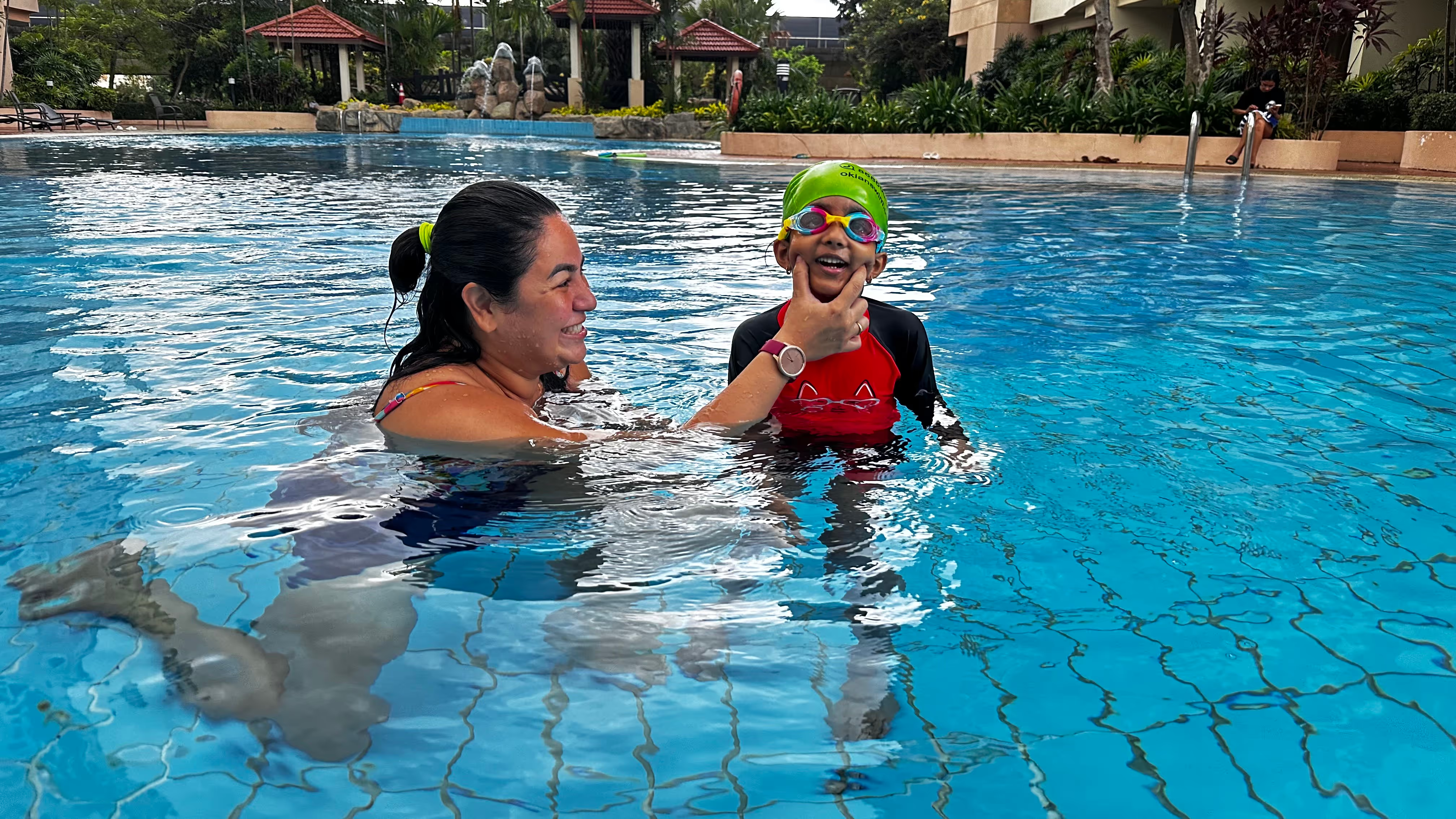
A 7-year-old boy with asthma could barely run without coughing. Three months later, he swam 15 metres non-stop, full of energy, and absolutely loved the water. But his parents were terrified. J had asthma. Every time he ran around the condo playground, he'd start coughing. They worried that swimming would trigger an attack.
They nearly didn't enrol him.
Three months later, J was swimming 15 metres of freestyle. His parents told me something I'll never forget: "He hasn't used his rescue inhaler in weeks. Even his wheezing at night has improved."
J's story is not unusual.
For decades, doctors and parents have noticed something remarkable: children with asthma often thrive in the pool. Swimming is consistently recommended by respiratory specialists as one of the best forms of exercise for asthmatics – sometimes even better than walking or cycling.
Let me explain why. And if your child has asthma, I'll tell you how to keep them safe in the water.
First, Let's Talk About What Asthma Actually Is
Asthma is a condition where your airways become inflamed and narrow. They swell up. They produce extra mucus. And the muscles around them tighten.
The result? Wheezing, coughing, shortness of breath, and that terrifying feeling of not getting enough air.
Triggers can be anything: cold air, pollen, dust, exercise, or even stress. For many children, running hard on a dry, cold day is a guaranteed attack.
That's where swimming becomes interesting.
Why Swimming Is Different from Other Sports
Most land-based sports – soccer, running, basketball – involve breathing dry, sometimes cold or polluted air. Your mouth is open. Your throat dries out. And you're often exercising in environments with pollen or dust.
Swimming is almost the opposite.
The air above a pool is warm and humid. That's critical. Humid air doesn't irritate dry, inflamed airways the way cold, dry air does. It's gentler on the lungs.
You're breathing through your mouth and nose in a controlled rhythm. Freestyle breathing – turning your head, inhaling, exhaling into water – forces a regular pattern. That rhythmic breathing can actually help stabilise the airways.
The horizontal position may help. Some studies suggest that lying horizontally in water changes how the diaphragm works, making it easier to move air in and out of the lower lungs.
There are no airborne triggers. Pools don't have grass pollen, tree pollen, or dust flying around. Yes, chlorine can be a trigger for a very small number of asthmatics (more on that later). But for most, the pool environment is far cleaner than a soccer field or a gym.
What the Science Says
Multiple studies have looked at swimming for asthma. Here's what they found:
Swimming improves lung function. Regular swimming strengthens the muscles used for breathing – the diaphragm and intercostals. Stronger breathing muscles mean more efficient airflow.
Swimmers with asthma have fewer attacks. One study followed children with asthma who swam regularly for several months. They had fewer hospital visits, less wheezing, and needed less rescue medication compared to those who didn't swim.
Swimming builds exercise tolerance. Many children with asthma avoid exercise because they're afraid of triggering an attack. That leads to deconditioning – weaker lungs, less fitness, and actually more sensitivity to triggers. Swimming breaks that cycle. It teaches the lungs to handle physical exertion in a controlled, humid environment.
The benefits last. Even after the swimming season ends, children who swam regularly maintained better lung function than those who didn't.
Does this mean swimming cures asthma? No. Asthma is a chronic condition. But swimming can dramatically reduce symptoms and improve quality of life.
Real Benefits for Children with Asthma
Let me list what parents at Swim Class Singapore have told me after their asthmatic children started lessons:
- Less wheezing at night
- Fewer school absences due to breathing problems
- Able to play with friends without needing their inhaler
- More confidence in their own bodies
- Better sleep (because breathing is easier)
One mother said: "Before swimming, my son would start coughing just walking up the stairs. Now he can run around the playground for an hour."
Another: "We used to keep his inhaler in every bag – school bag, my work bag, the car. Now we still carry it, but we rarely use it."
These are real results. Not from medication. From building stronger, more resilient lungs.
Important Safety Tips for Swimming with Asthma
Swimming is generally excellent for asthma. But there are precautions.
1. Warm up properly. Don't jump straight into hard kicking or fast laps. Start with 5–10 minutes of gentle swimming, floating, or walking in the water. Let the airways adjust.
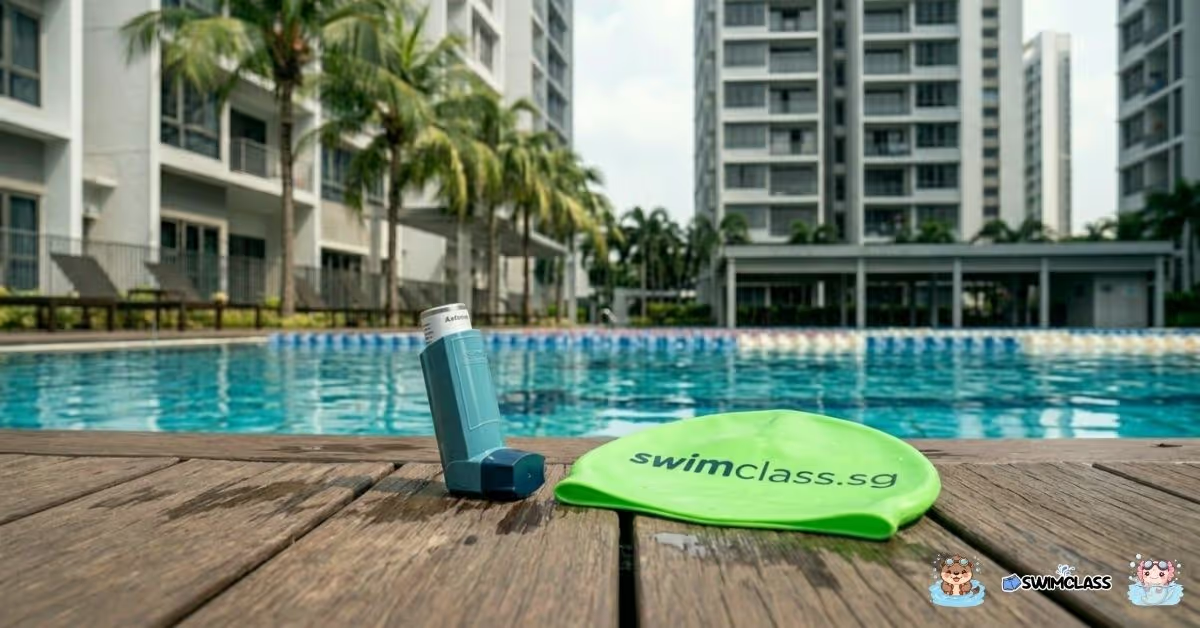
2. Keep the rescue inhaler at poolside. Have it in a visible spot – on a chair, in a swim bag, with the coach. You'll probably never need it. But having it there removes anxiety.
3. Use a pre-exercise puff if prescribed. Many doctors recommend taking two puffs of a reliever inhaler (like Ventolin or salbutamol) 15 minutes before exercise. Check with your child's doctor.
4. Watch for chlorine sensitivity. A small number of asthmatics are triggered by chlorine fumes, especially in indoor pools with poor ventilation. If your child coughs more after swimming, mention it to your doctor. Outdoor pools or pools with better air circulation may help.
5. Learn to control breathing in water. Teach your child to exhale slowly and completely underwater, then inhale quickly when turning for air. That rhythm – full exhale, quick inhale – is exactly what asthmatic lungs need during exercise.
6. Stop if symptoms appear. If your child starts wheezing, coughing, or feeling tight in the chest, stop swimming immediately. Sit at poolside. Use the inhaler. Wait until symptoms are completely gone before going back in.
7. Avoid very cold pools. Extremely cold water can trigger bronchospasm in some asthmatics. Singapore's condo pools are usually warm, so this is rarely an issue here.
8. Tell your coach. At Swim Class Singapore, we always ask parents about any medical conditions. If your child has asthma, tell us. We'll keep the inhaler nearby and watch for early signs of trouble.
What About Adults with Asthma?
Everything above applies to adults too.
I've coached adults in their 30s and 40s who grew up believing they "couldn't exercise" because of asthma. They avoided sports. They avoided pools. They lived in fear of the next attack.
Swimming changed that for many of them.
One woman in her late 30s told me she hadn't swum since primary school because a teacher once told her "asthmatics shouldn't exercise." That teacher was wrong. Within three months of weekly lessons, she was swimming 500 metres non-stop. Her asthma symptoms? Almost gone.
If you're an adult with asthma, start slowly. Warm up. Keep your inhaler nearby. And choose a coach who understands the condition.
How Swim Class Singapore Helps Swimmers with Asthma
At Swim Class Singapore (swimclass.sg) , we take asthma seriously.
- We ask every parent about medical conditions before the first lesson.
- We keep rescue inhalers at poolside – visible, accessible, clearly labelled.
- We watch for early signs of breathing difficulty (coughing, wheezing, pulling on the chest).
- We never push a child who is struggling to breathe.
- We teach rhythmic breathing – full exhale underwater, quick inhale – which strengthens asthmatic lungs.
- We communicate with parents after every lesson about how their child's breathing was.
Our affordable private lessons ($80) are ideal for asthmatic children who need one-on-one attention and careful pacing. Semi-private ($50) works for siblings or friends at similar fitness levels. Group lessons (from $32.50) are fine for well-controlled asthma.
And we come to your condo pool – so your child learns in a familiar, comfortable environment, with their inhaler never far away.
The Bottom Line
Asthma should not stop anyone from swimming. In fact, swimming is one of the best exercises for asthmatic lungs.
The warm, humid air above the pool is gentle on inflamed airways. The rhythmic breathing pattern trains the lungs to work efficiently. The horizontal body position may help the diaphragm move more freely. And the absence of common triggers (pollen, dust, cold air) makes the pool a safe place to exercise.
Yes, precautions matter. Keep the inhaler nearby. Warm up properly. Stop if symptoms appear. But don't let fear of asthma keep your child (or you) out of the water.
I've seen too many children transform from wheezy, breathless kids to confident, active swimmers. J, the 7-year-old I mentioned at the beginning? He's now 9. He swims 50 metres without stopping. His inhaler still comes to every lesson – but he almost never uses it.
That's the power of swimming for asthma.
Ready to Help Your Child Breathe Easier?
Book an affordable swimming lesson at Swim Class Singapore – we're experienced with asthmatic swimmers and always keep safety first.
👉 Book a lesson at swimclass.sg
Ready to find a suitable coach? Check swimming lesson availability for your preferred area and schedule.
Why Parents Love Swimming Lessons at Swim Class Singapore
Parents across Singapore trust Swim Class because we focus on both safety and fun.


Our lessons emphasize child-friendly teaching methods, small group attention, clear progression and skill development, and positive, encouraging instructors who help every child build confidence in the water.
Most importantly, we help kids build confidence in the water while enjoying every lesson.
Frequently Asked Questions About Kids Swimming Lessons
Everything parents usually ask before their little swimmer jumps in — from safety and schedules to choosing the right class.
Absolutely. Our baby swimming classes in Singapore are designed with safety as the top priority. Lessons are parent-assisted and led by certified swim instructors who specialize in helping babies and toddlers feel comfortable, confident, and happy in the water. Every session is gentle, structured, and designed to make those first splashes a positive experience.
It’s easier than you might think. Our kids swimming lessons in Singapore are organized by age and skill level, from baby swimming to beginner and intermediate programs. Simply share your child’s age and swimming experience, and we’ll recommend the class that helps them learn, progress, and enjoy the water at their own pace.
Yes, we offer swimming lessons at both condo pools and public swimming complexes across Singapore. This gives families the flexibility to choose the location that is most convenient for them.Lessons at public swimming pools are open to all students who want to join our swim classes.Lessons conducted at condo pools are available for residents of that condominium only, in accordance with condo management rules. If you live in a condo with a pool, we can arrange lessons right at your residence for added convenience.Just let us know your preferred location, and we’ll help match you with the best swimming lesson option in Singapore for your little swimmer.
Both options are available. We run swimming lessons at condo pools and public swimming complexes across Singapore, so you can choose the location that’s most convenient for your family. Once you tell us your preferred area, we’ll match you with a coach nearby.
Children can begin baby swimming lessons from around 6 months old. Starting early helps babies develop water confidence, basic safety awareness, and comfort in the pool — all while having fun and bonding with their parents.
Yes, we do. Our instructors provide SwimSafer preparation lessons in Singapore, helping children develop the swimming skills and water safety knowledge needed for the national SwimSafer programme. Lessons focus on both technique and confidence so kids feel ready for the next stage.
Still Curious? Let’s Chat!
Got a question about baby swimming, kids swimming lessons, or SwimSafer prep in Singapore? Our friendly team is happy to help you find the perfect class for your little swimmer.
Book your child's first lesson
Start your child’s swimming journey in Singapore with certified coaches who specialize in baby and kids swimming lessons. We’ll help your little swimmer build confidence, safety skills, and strong swimming technique from the very first splash.